Balancing Security, Privacy, Convenience, and Recoverability in Crypto Storage
Managing digital assets is less about finding a perfect wallet and more about deciding which risks are acceptable for a particular situation. Traditional financial institutions absorb much of that complexity. They handle account recovery, fraud investigations, identity checks, and other operational tasks behind the scenes. With self-custody, those responsibilities move closer to the individual, which means the design of the storage setup matters.
There is also no configuration that maximizes security, convenience, privacy, and recoverability at the same time. A wallet that is extremely isolated may be inconvenient to use. A setup with multiple recovery options may introduce additional people, devices, or procedures that need to be secured. Strong privacy practices can also make record-keeping more complicated. The practical goal, then, is not perfection. It is choosing sensible trade-offs for the way the assets are actually used.

The Four Pillars of Digital Asset Management
A useful way to evaluate a crypto storage strategy is to look at four related attributes: security, convenience, recoverability, and privacy. They overlap, but they are not interchangeable.
Security refers to protection against unauthorized access, theft, malware, phishing, compromised applications, and physical threats. It is concerned with what could happen if an attacker gains access to a device, account, key, or recovery method.
Convenience covers the everyday effort required to manage assets. A convenient wallet makes transactions, application connections, and routine transfers relatively simple. The trade-off is that reducing friction can sometimes mean accepting more exposure.
Recoverability describes how reliably access can be restored after a device fails, a backup is lost, or an authorized user can no longer access the original setup. A recovery plan needs to account for both digital and physical failures.
Privacy concerns how easily transactions, addresses, balances, and other information can be associated with a particular person or activity. Public blockchains make this especially complicated because transaction histories can remain visible even when an address does not directly reveal a person's identity.
These four attributes provide a useful framework because they force a more realistic question than “Which wallet is safest?” The better question is: Safest for what, and under which circumstances?
Security Versus Convenience
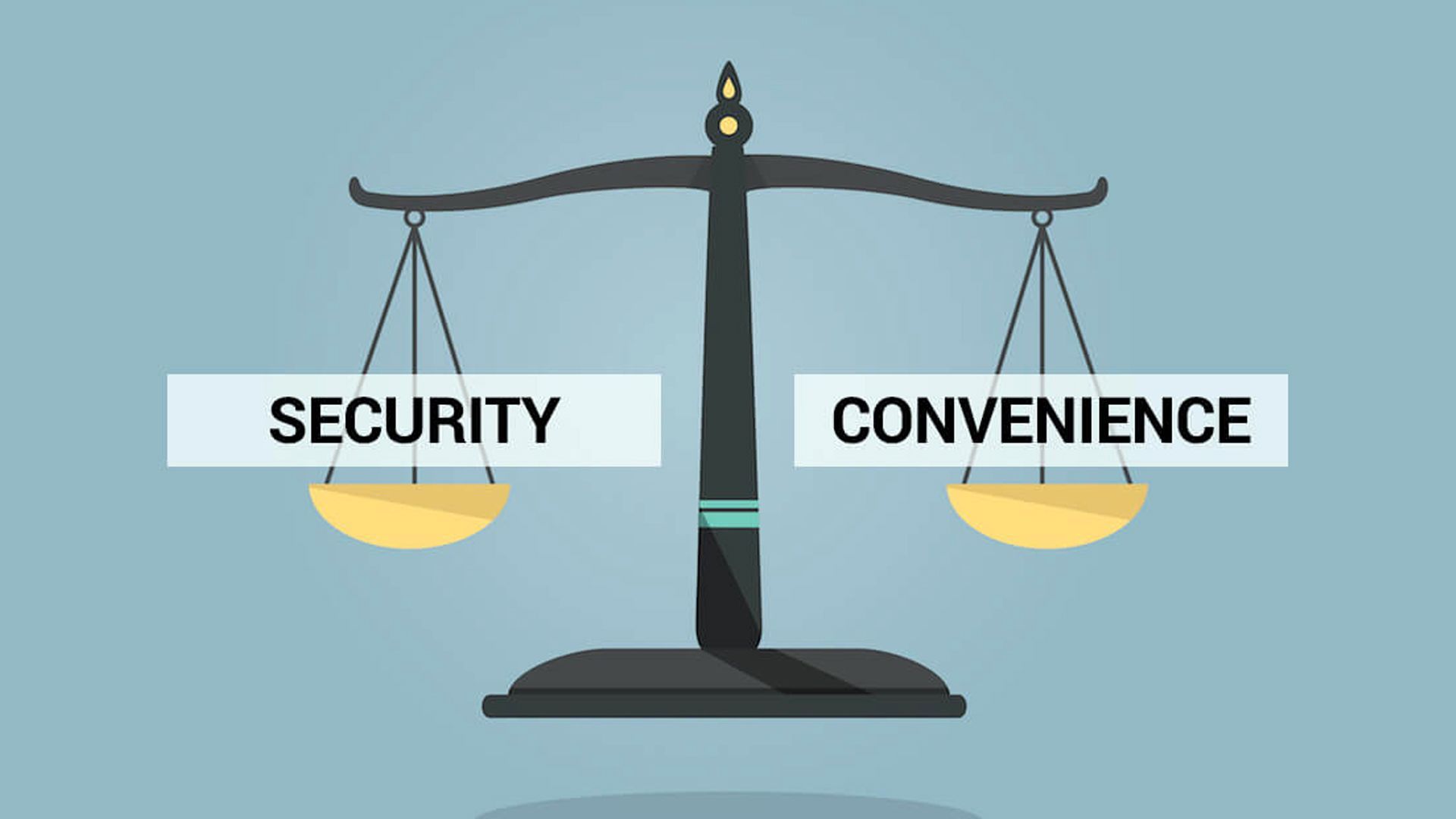
The tension between security and convenience is easy to see.
A hardware wallet kept primarily for long-term storage can reduce exposure to many routine online threats, but using it requires additional steps. The physical device has to be available, transactions need to be reviewed, and signing often involves deliberate confirmation. For someone making frequent payments, that extra friction can become frustrating.
A mobile or browser-based wallet is much easier to use for everyday activity. It can connect to Web3 applications, scan payment requests, and handle transactions without the same physical workflow. That convenience, however, comes with a different risk profile because the wallet operates in a more connected environment.
Neither approach is universally superior. The sensible choice depends on what the wallet is expected to do. A wallet used several times a day should not necessarily be designed in exactly the same way as one intended to sit untouched for months or years.
That distinction is one reason compartmentalized storage can work well. A user can keep a highly protected wallet for long-term holdings while using a separate wallet for activities where convenience matters more.
Recoverability Versus Security
Recovery creates another subtle trade-off.
A recovery phrase stored in a single, carefully protected physical location can minimize the number of places where sensitive information exists. But it also creates a physical dependency. Fire, flooding, theft, accidental destruction, or simple loss can turn that backup into a single point of failure.
Adding additional recovery copies can improve resilience against physical loss, but every copy becomes another security responsibility. More copies mean more places that need to be protected.
The same principle applies to more advanced recovery arrangements. Multi-signature systems, distributed backups, and carefully designed recovery procedures can reduce dependence on a single secret or device. At the same time, they introduce additional components that have to work correctly when access is needed.
A good recovery plan therefore needs to answer two separate questions: How can the assets be recovered if something is lost, and how can the recovery information itself be protected?
Those questions are easy to overlook because people tend to think of recovery as purely a convenience feature. In self-custody, it is part of the security architecture.
Privacy Versus Usability
Privacy works differently from the other three attributes because public blockchain activity can remain visible even when the person behind an address is not immediately obvious.
Using a new address does not automatically make activity private. Transactions can sometimes be linked through address reuse, public information, exchange activity, transaction patterns, or other contextual clues. A wallet may therefore provide a degree of pseudonymity without providing complete financial privacy.
Improving privacy can also add practical friction. Keeping records across multiple addresses may make personal accounting more complicated. Moving between services can create additional identity and transaction records, while more sophisticated privacy practices may require additional technical knowledge.
That does not make privacy a secondary concern. It simply means that privacy goals should be defined clearly. Someone who wants to keep personal spending separate from long-term holdings may need a different setup from someone managing public-facing blockchain activity or maintaining detailed financial records.
The important point is that privacy should be treated as a design requirement rather than assumed to be a built-in feature of cryptocurrency.
Why Different Users Need Different Architectures
There is no single wallet configuration that fits everyone.
Someone using cryptocurrency occasionally for small payments may reasonably prioritize convenience. A simple mobile wallet with a limited balance can be easier to manage than a complex multi-device setup.
A person who frequently interacts with decentralized applications has a different problem. Frequent connections create more opportunities for phishing, malicious contracts, incorrect approvals, and user error. Separating active Web3 activity from long-term holdings can reduce the amount of capital exposed to those interactions.
Someone storing assets for the long term may place much more weight on isolation and recovery planning. In that situation, transaction speed becomes far less important than protecting keys, maintaining durable backups, and establishing clear procedures for accessing the assets when necessary.
The right architecture is therefore closely tied to behavior. A highly sophisticated setup is not automatically safer if its owner cannot remember which device, backup, or wallet is responsible for what.
Practical Ways to Balance the Trade-Offs
A few principles can make the architecture easier to manage without turning it into an unnecessarily complicated system.
Separate Wallets by Purpose
Different wallets can serve different operational roles. A long-term storage wallet can remain largely disconnected from Web3 applications, while a separate wallet handles routine interaction with decentralized services. A third wallet may be useful for small everyday payments if those transactions are frequent.
The objective is not to create as many wallets as possible. Every additional wallet creates another address, recovery process, and administrative task. Separation is useful when it creates a meaningful security boundary.
Keep Active Balances Limited
A wallet used for frequent Web3 activity does not need to contain every asset owned by the user. Keeping its balance appropriate to its purpose can limit the potential impact of a compromised application or mistaken transaction.
This is particularly useful when experimenting with unfamiliar services. The wallet taking the operational risk should not automatically have access to long-term holdings.
Review Permissions Periodically
Smart-contract approvals and other permissions can remain active after the original transaction has been completed. Periodic reviews can help identify permissions that are no longer needed.
Any service used to inspect or manage permissions should itself be treated cautiously. A security check is only useful if the tool performing it is trustworthy and the network and contract information are interpreted correctly.
Test Recovery Procedures
A backup is only useful if it can actually restore access when required.
Before relying on a new recovery arrangement for significant assets, it can be sensible to verify the procedure using a controlled environment or secondary device. The purpose is not to expose the primary recovery material unnecessarily, but to confirm that the documented process is understandable and that the necessary components are available.
This is especially important for complex arrangements. A recovery system that looks excellent on paper but cannot be reconstructed under pressure is not a reliable recovery system.
Keep Documentation Separate From Secrets
Documentation can explain how a wallet is organized without revealing the credentials needed to control it.
For example, a person may maintain a secure record indicating which wallet serves as the long-term vault and which device is used for everyday transactions, while keeping recovery phrases and other sensitive credentials protected separately. This can reduce confusion without creating a single document containing everything an attacker would need.
More Security Does Not Always Mean More Complexity
It is tempting to respond to every new crypto threat by adding another wallet, another backup, another password, or another security procedure. That approach can eventually become counterproductive.
Complexity has its own failure modes. People forget procedures. Devices are misplaced. Backups become outdated. A wallet may be used for the wrong purpose simply because its owner cannot remember which one was intended for a particular task.
A smaller system that is clearly understood can therefore be more practical than a highly elaborate architecture that is rarely maintained correctly.
The useful question is not “How many security layers can be added?” It is “Which layers address the risks that actually matter?”
A Practical Risk-Based Model
A simple way to design the setup is to classify activities by their level of exposure.
Low-interaction activities are things such as holding assets for an extended period. These generally benefit from stronger isolation and careful recovery planning.
Medium- or high-interaction activities include connecting to decentralized applications, managing liquidity positions, or conducting frequent transactions. These activities can justify a separate operational wallet with a deliberately limited balance.
Routine spending activities may benefit from a lightweight wallet containing only the amount needed for ordinary payments.
This model does not require every user to maintain three wallets. It simply creates a framework for deciding whether different activities should share the same security boundary.
The Real Trade-Off: Risk, Effort, and Responsibility
Self-custody changes the meaning of convenience. A traditional financial account can often be recovered through an institution after a forgotten password or lost device. A self-custodial wallet does not necessarily provide the same safety net.
That additional responsibility is not automatically good or bad. It simply changes where the risk sits.
A carefully isolated wallet may reduce exposure to online attacks but demand more physical planning. A convenient hot wallet may make transactions easier while requiring greater caution around websites and applications. A robust recovery arrangement may protect against physical loss while introducing additional procedures that must themselves be maintained.
The best architecture acknowledges those trade-offs rather than pretending they do not exist.
Conclusion
Crypto storage is ultimately a risk-management exercise. Security, privacy, convenience, and recoverability pull the design in different directions, and improving one area can introduce new costs elsewhere.
A practical approach is to match the architecture to the activity. Long-term holdings can use stronger isolation, active Web3 interactions can take place in a dedicated operational environment, and everyday payments can be handled with a limited balance when necessary. Recovery procedures should be tested, sensitive information should be compartmentalized, and the overall system should remain simple enough to manage correctly.
There is no perfect wallet setup. There is only a setup that makes the risks understandable and keeps them within reasonable boundaries.
Filed under
More Stories