Building Automated Savings Systems Through Scheduled Transfers, Split Deposits, and Sweep Accounts
Saving consistently is rarely only a matter of discipline. Many people understand the importance of saving money but struggle to make it happen regularly because everyday spending decisions compete with long-term goals. When saving depends on remembering to transfer money at the end of the month, it often becomes the first item removed when unexpected expenses appear.
An automated savings system changes the process by making saving part of the financial routine. Instead of relying on leftover money, automation creates a planned movement of funds through scheduled transfers, split direct deposits, or sweep accounts. These tools do not guarantee financial success, but they can reduce decision fatigue and make consistent saving easier to maintain.
The best system depends on a person’s income pattern, financial goals, account structure, and need for flexibility. A new graduate building an emergency fund, a salaried employee saving for a home purchase, and an investor managing excess cash may all benefit from automation, but they may use different methods.
Why Automated Saving Can Be More Sustainable
Traditional saving requires repeated action. A person must remember to check balances, decide how much is available, and manually move money into a separate account. Even people with good intentions may postpone saving when bills, family expenses, or unexpected costs create competing priorities.
Automation changes the default behavior. Money is moved according to a predetermined plan before it becomes part of everyday spending decisions. This approach is closely related to research in behavioral economics showing that reducing the number of decisions required can influence financial behaviors. Automatic enrollment in retirement plans, for example, has been studied as a way to increase participation by making saving the default choice rather than an optional action.
The same idea applies to personal banking. A recurring transfer or payroll allocation creates consistency because saving happens automatically instead of depending on monthly motivation. However, automation works only when the amount is realistic. A system that moves too much money too quickly can create cash shortages, while a system that saves too little may not meaningfully support a financial goal.
A successful automated savings plan is therefore not about choosing the highest possible savings amount. It is about creating a process that can continue for months and years while still allowing room for normal expenses.
Scheduled Transfers: The Most Accessible Starting Point
Scheduled transfers are one of the simplest ways to automate savings. They allow a person to move money automatically from a checking account into a savings account at a chosen time, such as every payday or once a month.
A common example is an employee who receives a paycheck every other Friday and schedules a transfer to occur shortly afterward. Because the money leaves the checking account early in the pay cycle, it becomes easier to treat savings as a regular expense rather than something done only when extra cash remains.
Scheduled transfers are useful because they provide control. The account holder can choose the amount, frequency, and destination, then adjust the settings when circumstances change. Someone paying off a loan, receiving a raise, or reducing monthly expenses may increase the transfer amount without rebuilding the entire system.
The main limitation is that scheduled transfers require attention to cash flow. If a transfer occurs before rent, utilities, or other obligations are covered, the account balance may become too low. Consumers should review their bank’s policies on transfer timing, overdraft protection, and available balance rules before establishing recurring movements.
A practical approach is to begin with an amount that feels sustainable rather than choosing an aggressive target. Once the habit becomes established, savings can be increased gradually as financial conditions improve.

Split Deposits: Saving Before Money Enters Daily Spending
Split direct deposits work by dividing income at the source. Instead of receiving an entire paycheck in a checking account and transferring money afterward, an employee can direct part of each paycheck into a separate savings account.
For example, a salaried employee earning a predictable income may choose to send a fixed amount from every paycheck into an emergency fund while the remaining income goes toward regular household expenses. Because the money never enters the main spending account, it becomes easier to maintain the savings habit.
Split deposits can be particularly effective for people who prefer a “set it and forget it” approach. They reduce the temptation to spend money that was originally intended for savings and make progress more visible over time.
Availability depends on the employer’s payroll system. Some workplaces allow employees to send funds to multiple accounts, while others provide fewer options. Employees generally need to confirm available arrangements through payroll or human resources.
The challenge is determining the right amount. A household that directs too much income toward savings may struggle with routine expenses, while a household that directs too little may not reach its goals efficiently. A good setup considers fixed bills, variable spending, debt obligations, and irregular costs such as insurance payments or annual subscriptions.
Sweep Accounts: Automating Excess Cash Management
Sweep accounts use automatic rules to move money when an account reaches a certain balance level. Unlike a scheduled transfer, which usually happens on a fixed date, a sweep arrangement responds to available cash.
These accounts are commonly used with brokerage accounts, cash management services, and certain banking products. A sweep feature may move excess cash into another account or financial product based on predetermined instructions.
For someone managing larger cash balances, a sweep account can help organize money that would otherwise remain unused. For example, an investor may want uninvested cash in a brokerage account moved automatically into a designated cash option instead of leaving it idle.
However, sweep accounts require more careful review because not all sweep arrangements work the same way. Some programs move cash into bank deposit accounts, while others move funds into money market funds or other investment-related products. The protection and risks depend on where the money is placed.
Consumers should not assume that every sweep account has identical insurance coverage. Eligible deposits held at FDIC-insured banks are generally covered by FDIC deposit insurance within applicable limits, while investment products are not covered in the same way. The FDIC states that standard deposit insurance coverage is generally $250,000 per depositor, per insured bank, for each ownership category.
Brokerage cash sweep programs can involve additional considerations. The Securities and Exchange Commission notes that investors should review whether cash is placed into an FDIC-insured bank sweep program or another option, because protections, risks, and potential returns can differ. A person using a sweep account should read the account agreement and understand where funds are held rather than treating the feature as a simple savings transfer.
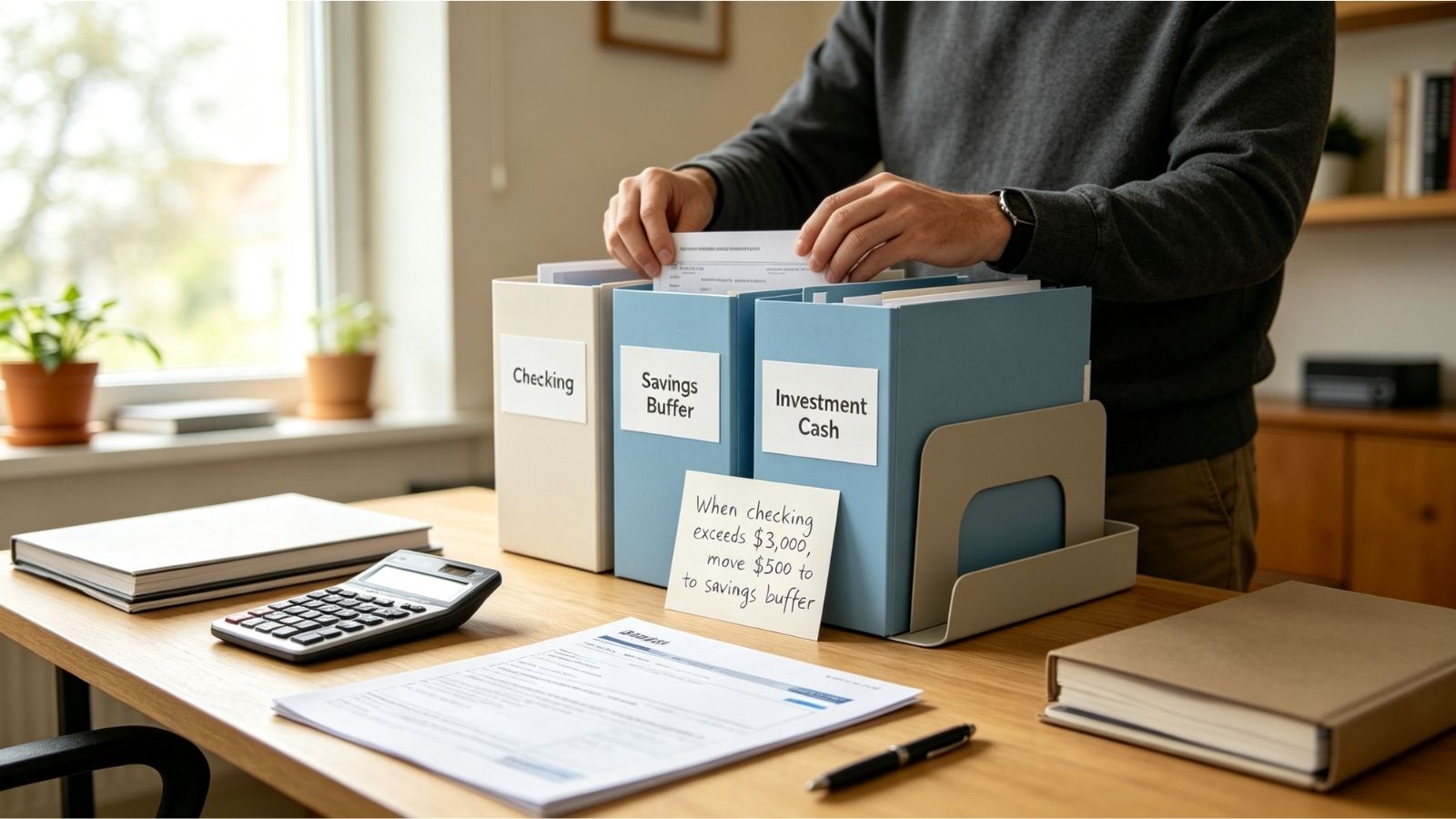
How to Build an Automated Savings System Step by Step
Creating an automated system starts with defining the purpose of the money. Savings for emergencies, a vehicle purchase, a vacation, and retirement planning may require different account choices and different levels of access.
The next step is selecting the automation method that matches the goal. Someone building an emergency fund may prefer a scheduled transfer into a separate savings account. A worker with a predictable paycheck may benefit from split deposits. A person managing excess cash in investment accounts may consider a sweep arrangement after understanding the associated terms.
The amount should then be tested against real monthly cash flow. A good system leaves enough money available for regular expenses while still creating measurable progress. It is usually easier to increase savings later than to recover from a setup that creates repeated cash shortages.
After the system is established, regular reviews are essential. Income changes, family circumstances shift, and financial priorities evolve. A transfer amount that worked two years ago may no longer fit current needs. Reviewing the system every few months helps ensure automation remains useful rather than becoming an outdated financial habit.
Real-Life Examples of Automated Saving in Practice
Consider a teacher who receives a predictable paycheck every two weeks. Instead of waiting until the end of the month to see what remains, the teacher directs part of each paycheck into a high-yield savings account through split deposit or a recurring transfer. Over time, the account grows without requiring a separate monthly decision.
A different situation applies to a freelance designer whose income changes from month to month. Rather than using a fixed paycheck-based split, the designer may review monthly income and schedule transfers after larger payments arrive. The system is still automated, but the timing and amount are adjusted to match irregular cash flow.
These examples show that automation does not require every person to use the same formula. The goal is to create a repeatable process that fits the way money actually enters and leaves an individual’s financial life.
Avoiding Common Automation Mistakes
One mistake is setting up automatic savings and never reviewing the arrangement again. Financial systems should change as circumstances change. A person who receives a raise, pays off debt, or experiences a major life event may need to update transfer amounts.
Another mistake is focusing only on saving while ignoring other financial priorities. Emergency reserves, debt payments, retirement contributions, and short-term expenses all compete for available income. Automation should support an overall financial plan rather than operate separately from it.It is also important to understand account access. Money designated for emergencies should generally remain accessible enough to cover unexpected needs. Moving funds into accounts with restrictions or unfamiliar features without understanding the terms can create unnecessary complications.
Creating a Savings System That Lasts
The value of automated savings comes from consistency. Scheduled transfers, split deposits, and sweep accounts each solve different challenges, but the underlying goal is the same: creating a financial process that requires fewer repeated decisions.
A strong savings system is not the one with the most complicated structure. It is the one that matches a person’s income, expenses, goals, and comfort level. When automation is combined with regular reviews and careful account selection, saving becomes a more reliable part of everyday financial management rather than a task that depends on remembering at the right moment.
Filed under
More Stories