Engineering Secure Crypto Backups: Entropy, Seed Phrases, and Recovery Architecture
In many self-custody cryptocurrency wallets, a recovery phrase is one of the most important pieces of information protecting access to the wallet. Lose it, expose it, or record it incorrectly, and the consequences can be serious. Unlike a traditional bank account, a self-custody wallet generally does not come with a universal password-reset process or a central administrator who can restore access to funds.
A reliable backup strategy therefore has to account for more than simply writing down a list of words. Security starts with how the wallet generates its underlying randomness, continues with how the recovery information is stored, and ends with whether the backup can actually be used when it is needed.
The Foundation: Where Randomness Comes From
A secure recovery phrase begins with unpredictable cryptographic material. This is where the concept of entropy comes in.
Entropy, in this context, describes the amount of unpredictable information used to create a wallet's cryptographic keys. Under the widely used BIP-39 standard, a wallet can begin with either 128 bits or 256 bits of entropy.
128 bits of entropy results in a 12-word mnemonic after the checksum is added.
256 bits of entropy results in a 24-word mnemonic after the checksum is added.
BIP-39 combines the original entropy with a checksum and divides the resulting bit sequence into 11-bit groups. Each group corresponds to an entry in a standardized list containing 2,048 words.
The words are therefore not chosen for their meaning. They are a human-readable representation of underlying binary information.
That distinction matters because the security of the resulting wallet depends heavily on the quality of the randomness used during generation. If an implementation produces predictable entropy, the apparent complexity of the recovery phrase can be misleading. An attacker who can predict the underlying random values may be able to reproduce the resulting keys.
For this reason, reputable wallet implementations use cryptographically appropriate sources of randomness and may incorporate hardware-based entropy. The exact design varies by device and software, so it is better to evaluate a wallet's documented security architecture than to assume every product generates randomness in exactly the same way.
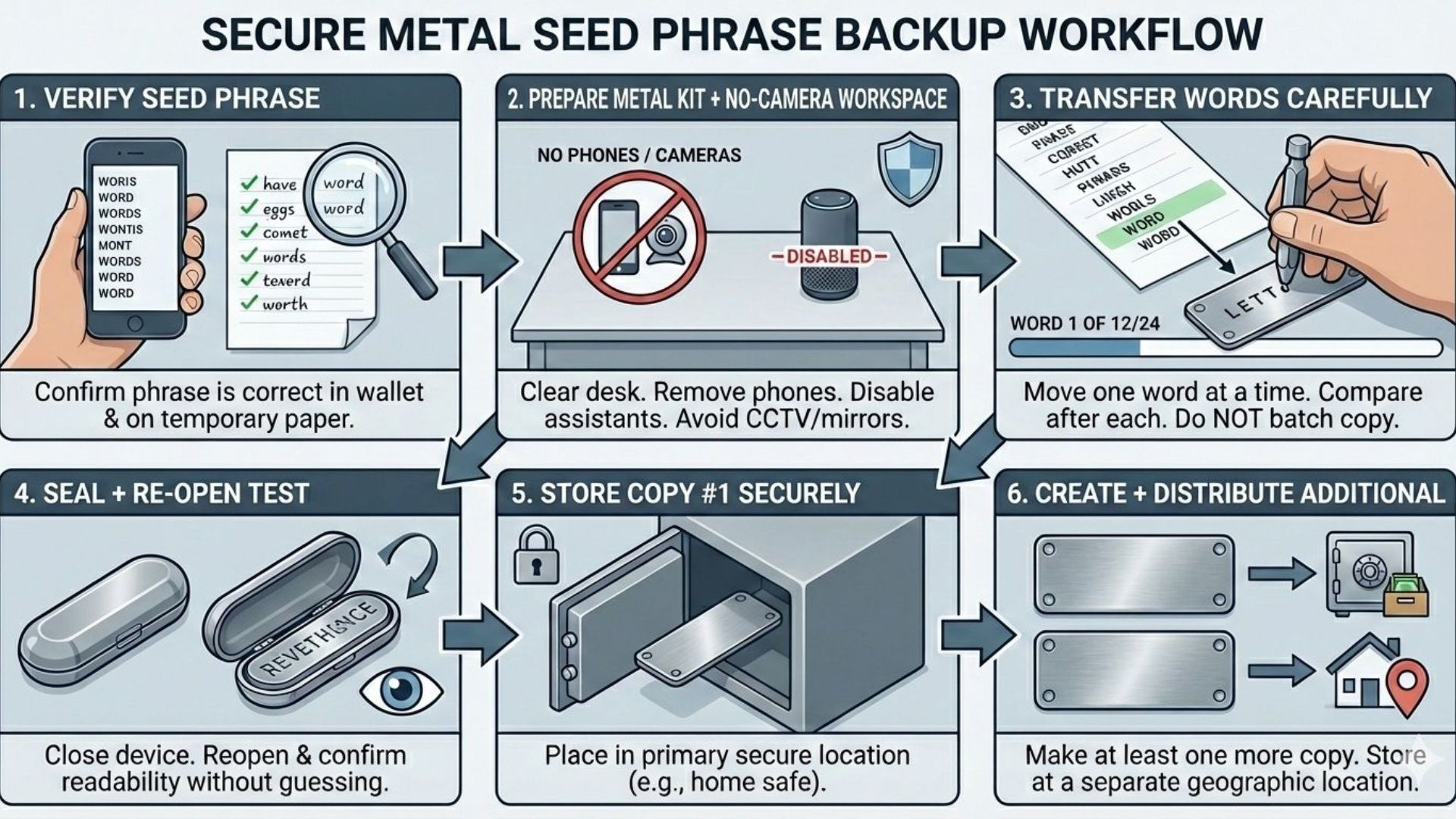
Turning Digital Secrets Into a Physical Backup
Once a recovery phrase has been generated, it has to survive outside the wallet itself.
This is where an unusual security problem appears: highly sensitive digital information needs to be preserved as physical information without exposing it to another digital system.
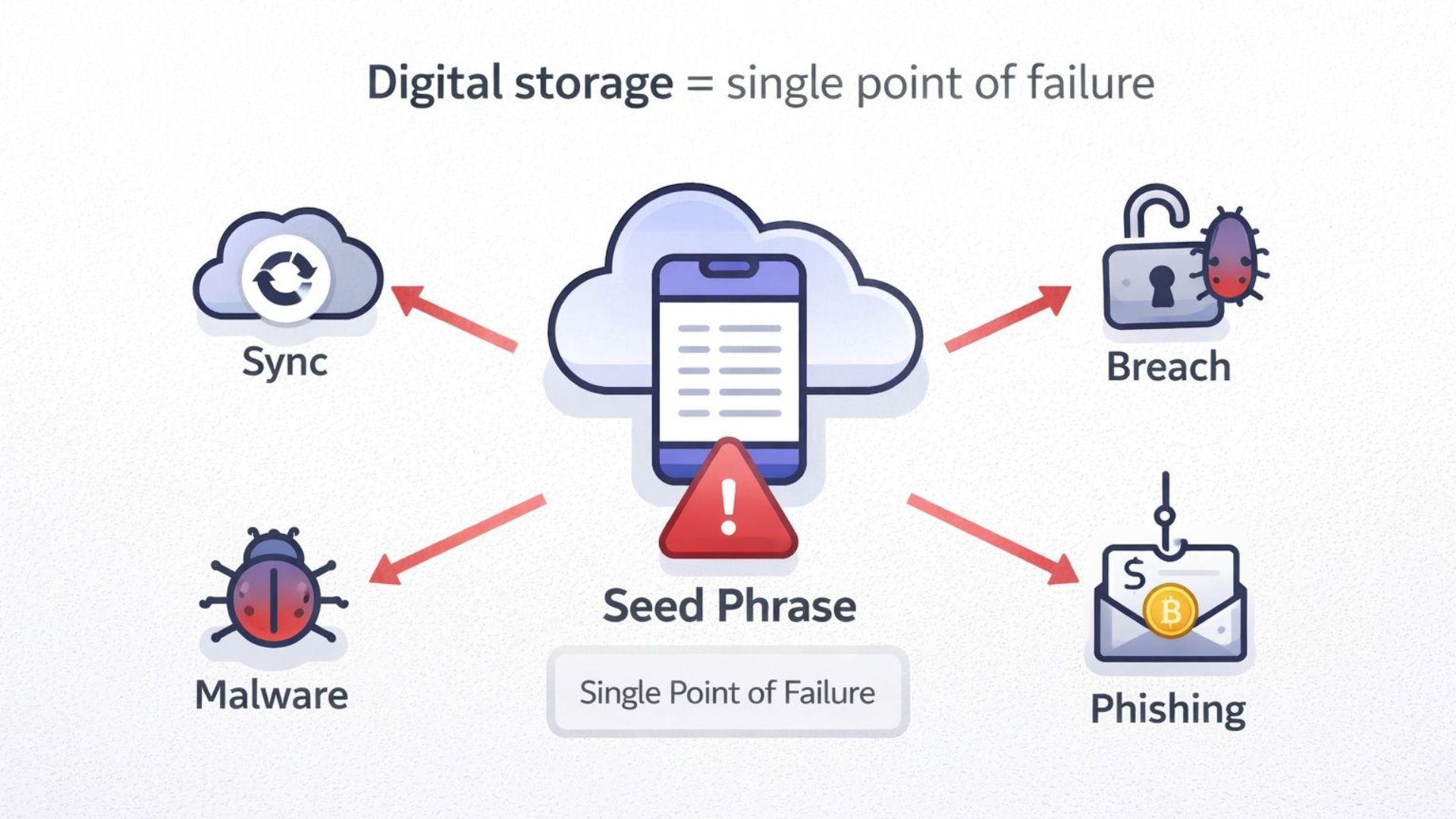
Saving a recovery phrase in a screenshot, cloud document, email account, or ordinary notes application creates a new attack surface. If the device or online account is compromised, the recovery phrase could be exposed along with everything else stored there.
For a strong self-custody setup, the recovery phrase should generally be kept offline and away from internet-connected devices.
Paper is simple and inexpensive, but it is not indestructible. Moisture, mold, ink deterioration, tearing, fire, and other environmental hazards can make a paper backup unreadable. The more important the wallet, the more carefully its physical backup should be protected.
Metal backup products are one option for users who want greater resistance to heat, water, and physical deterioration. Depending on the design, the recovery information can be engraved, stamped, or otherwise encoded into a metal medium.
The important point is not the material itself. It is redundancy and durability. A backup that looks secure in a drawer but cannot be read after years of storage is not a reliable backup.
The Optional BIP-39 Passphrase
Some wallets that support BIP-39 also support an optional passphrase. It is sometimes called a "25th word," but that nickname can be misleading. The passphrase is not necessarily a single word and is not simply another item added to a standard 24-word phrase.
Instead, the passphrase changes the wallet's key derivation process. The same recovery phrase combined with two different passphrases can produce two different wallet hierarchies and address sets.
That creates an important security property. Someone who obtains the recovery phrase but does not know the correct passphrase may still be unable to derive the wallet containing the assets protected by that passphrase.
There is a serious trade-off, though. The passphrase is not something a support department can recover. If the correct passphrase is forgotten or recorded incorrectly, the associated wallet may become inaccessible even when the original recovery phrase is available.
A passphrase can therefore add another layer of protection, but it also adds another secret that must be managed correctly.
Threshold Recovery and Secret Sharing
A different problem appears when a person wants to avoid keeping one complete recovery secret in a single physical location.
Simply cutting a recovery phrase into pieces is usually a poor solution. If the phrase is divided into consecutive groups of words, losing one piece can make the entire backup unusable. Worse, an attacker who obtains enough pieces may be able to reconstruct the secret.
Threshold-based secret-sharing systems take a more structured approach.
Some wallet recovery schemes, including implementations based on SLIP-0039, use secret-sharing techniques derived from Shamir's Secret Sharing. Instead of relying on one complete backup, the secret can be represented through multiple shares, with a predetermined number of shares required for recovery.
For example, a setup could require three shares out of five before the recovery secret can be reconstructed. The exact configuration depends on the implementation.
This can make geographic distribution possible. Different shares can be stored in separate secure locations, reducing the risk that one damaged, lost, or compromised location destroys the entire recovery system.
But complexity has a cost. A sophisticated backup system can fail because of poor documentation just as easily as a simple one can fail because of physical damage. Anyone using threshold recovery needs to understand exactly how many shares are required, where they are stored, and how restoration works.
Test the Backup Before It Becomes an Emergency
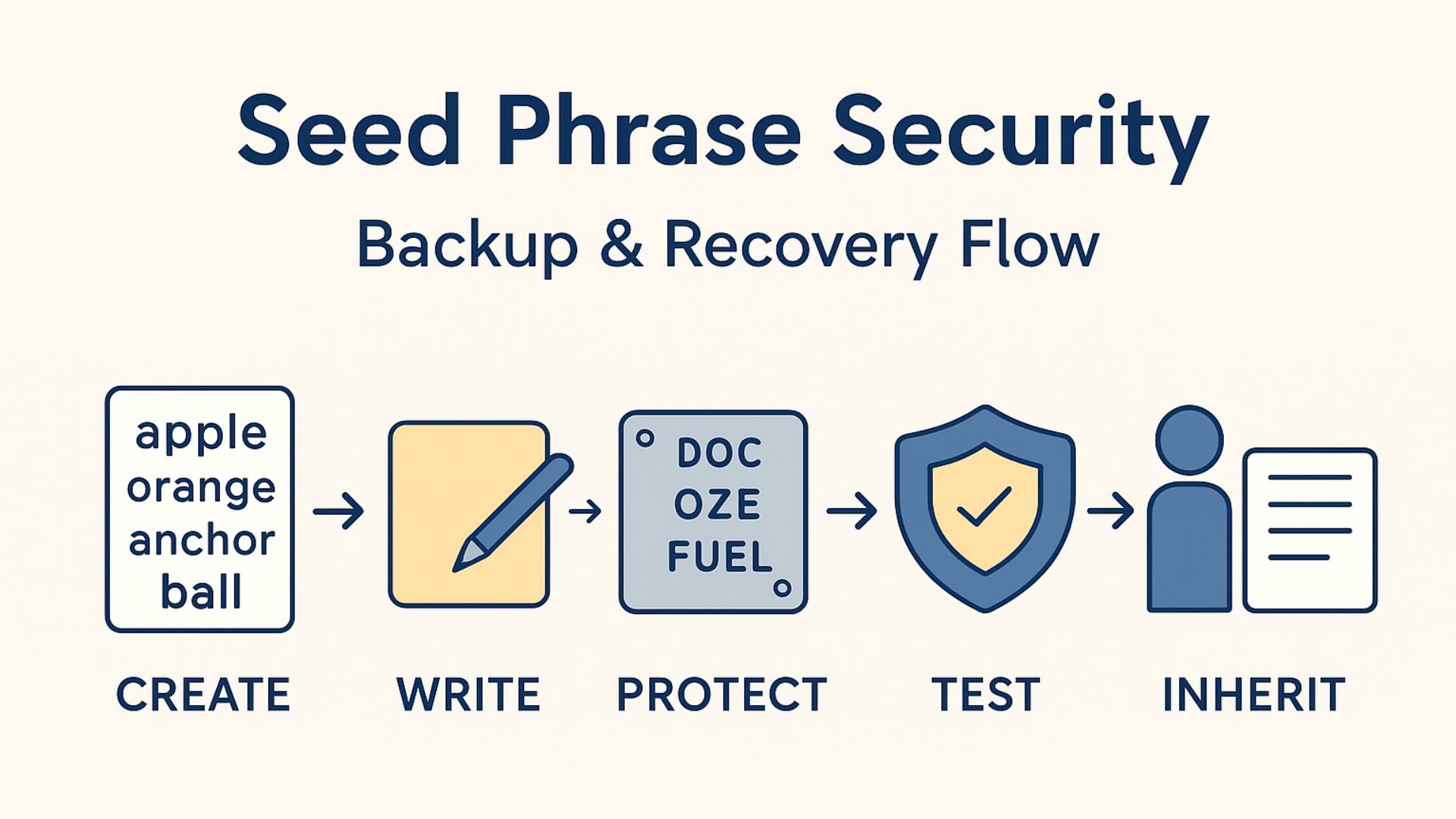
A backup that has never been tested is still an assumption.
This is one of the easiest mistakes to make with self-custody. Someone carefully writes down a recovery phrase, puts it somewhere safe, and moves on. Months or years later, when the original device fails, they discover that one word was written incorrectly or that the words were recorded in the wrong order.
Common problems include:
Misreading or misspelling a word during transcription.
Recording the words in the wrong sequence.
Losing part of the written backup.
Confusing a wallet password with the recovery phrase.
Forgetting an optional passphrase.
Assuming that a backup belongs to one wallet when it actually restores another account or address set.
A recovery test can catch these problems before they become costly.
Where the wallet manufacturer supports such a procedure, the backup can be verified by restoring the wallet on a compatible device or through an appropriate recovery workflow. The goal is to confirm that the recovery information produces the expected wallet and addresses before significant assets are committed to it.
This process should be performed carefully. A recovery test should never involve entering a sensitive phrase into an untrusted website, computer, or application merely because it claims to offer a "wallet recovery check."
Designing for Real-World Failure
A good backup strategy is not built around a single disaster scenario. It considers several.
What happens if the phone breaks?
What happens if the hardware wallet is lost?
What happens if a paper backup gets wet?
What happens if a person who knows where the backup is stored becomes unavailable?
And perhaps the most important question: what happens if the original wallet is completely inaccessible tomorrow?
The answers do not necessarily require an elaborate system. For some users, a carefully generated recovery phrase stored offline in a durable location may be enough. Others may benefit from a second protected backup or a threshold-based recovery design.
The right arrangement depends on the amount of responsibility involved, the value being protected, the physical environment, and how complicated a recovery process the user can realistically maintain.
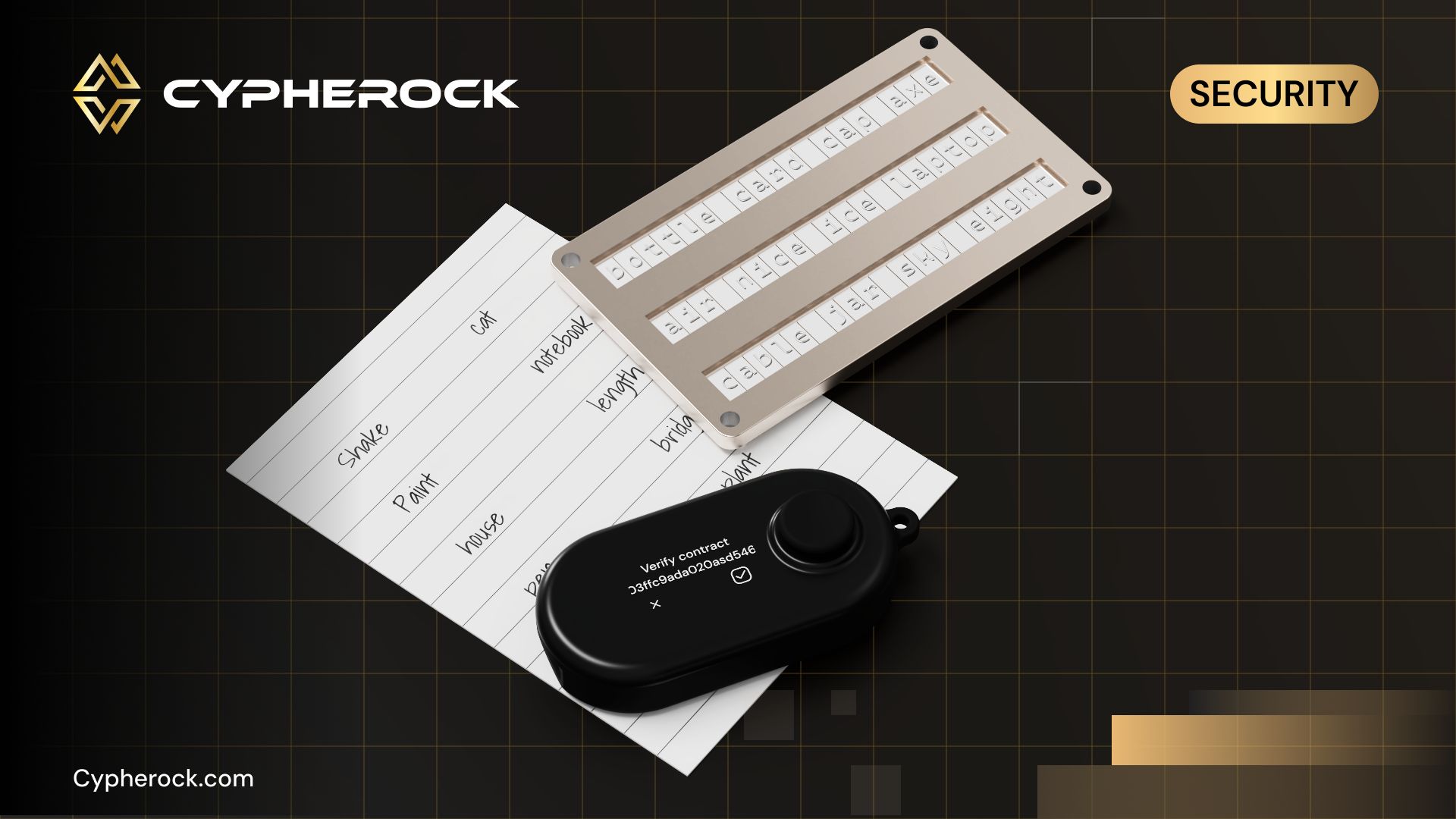
The Backup Is Part of the Security System
A recovery phrase is often treated as a piece of paper containing a list of words. Technically, it represents something much more important: information that can participate in recreating the cryptographic credentials controlling a self-custody wallet.
That is why secure backup design starts with entropy and ends with recovery testing. The phrase must be generated from appropriate randomness, kept away from unnecessary digital exposure, preserved against physical damage, and documented well enough to be recovered correctly.
More elaborate options, such as passphrases or threshold-based recovery, can address specific risks, but they also introduce additional complexity. There is no universal backup design that is safest for every person.
The goal is simpler: create a recovery system that remains confidential, survives realistic forms of loss or damage, and can actually be understood and restored when the original wallet is no longer available. In self-custody, that preparation is not an optional extra. It is part of the security architecture itself.
Filed under
More Stories