How Hardware Wallet Security Works: Chips, Firmware, and Transaction Verification
A hardware wallet is often described as one of the safest ways to manage cryptocurrency private keys. The basic idea is straightforward: keep sensitive signing operations away from an ordinary computer or phone, where malware and other online threats may be present. But buying a physical wallet does not automatically make every transaction safe. The device still depends on its chip architecture, firmware, screen, approval process, and the way it handles information from connected software.
That makes hardware wallet security more complicated than a simple “secure” or “insecure” label. A better evaluation looks at several layers at once: how private keys are protected inside the device, how firmware is authenticated, how updates are handled, what the user can verify on the device itself, and how the manufacturer protects the product before it reaches the buyer.
The Role of Secure Elements
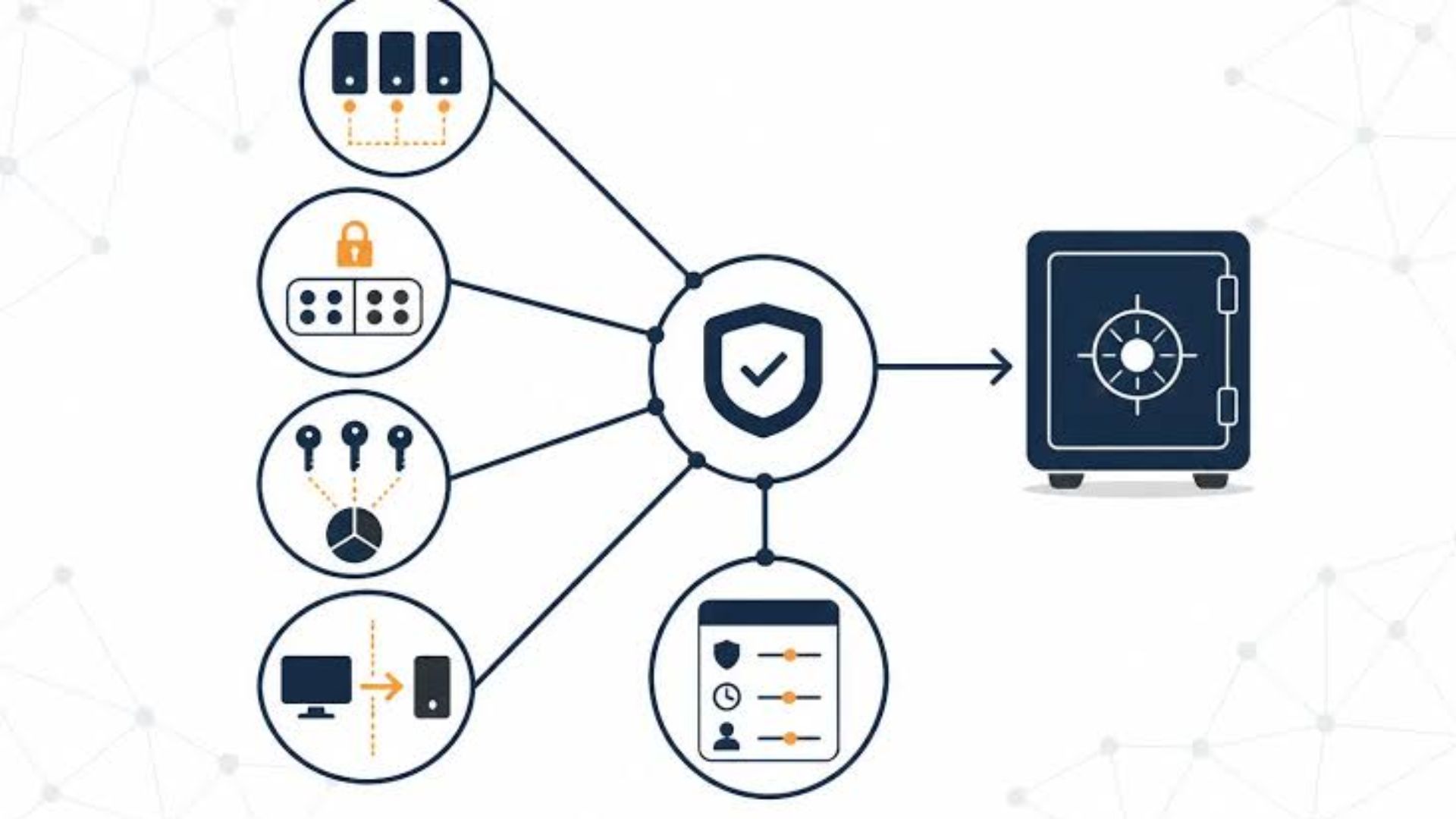
At the center of many hardware wallet designs is a microcontroller, sometimes paired with a dedicated Secure Element. These components do different jobs, and understanding that distinction is useful when comparing devices.
A general-purpose microcontroller is designed to run software and handle a wide range of tasks. A Secure Element, by contrast, is a specialized security component designed to protect sensitive information and perform security-critical operations under controlled conditions. Secure Elements are also used in areas such as payment cards, identity documents, and mobile security.
Their value comes partly from resistance to physical attacks. Depending on the specific chip, security features can include tamper detection, protections against fault injection, and countermeasures designed to make side-channel analysis more difficult. These mechanisms are intended to raise the difficulty of extracting secrets even when an attacker has physical access to the device.
That does not mean every Secure Element works in exactly the same way. Security features vary by manufacturer and chip family, and a certification attached to a particular component should not automatically be interpreted as a certification of the entire wallet.
This distinction matters when reading technical specifications. A device might use a certified Secure Element while relying on a separate general-purpose microcontroller for other functions. Another design might place greater emphasis on open-source components and use different approaches to protect sensitive operations. Neither architecture should be judged by a single specification alone.
What Security Certifications Actually Tell You
Security certifications can provide useful information, but they are easy to misunderstand.
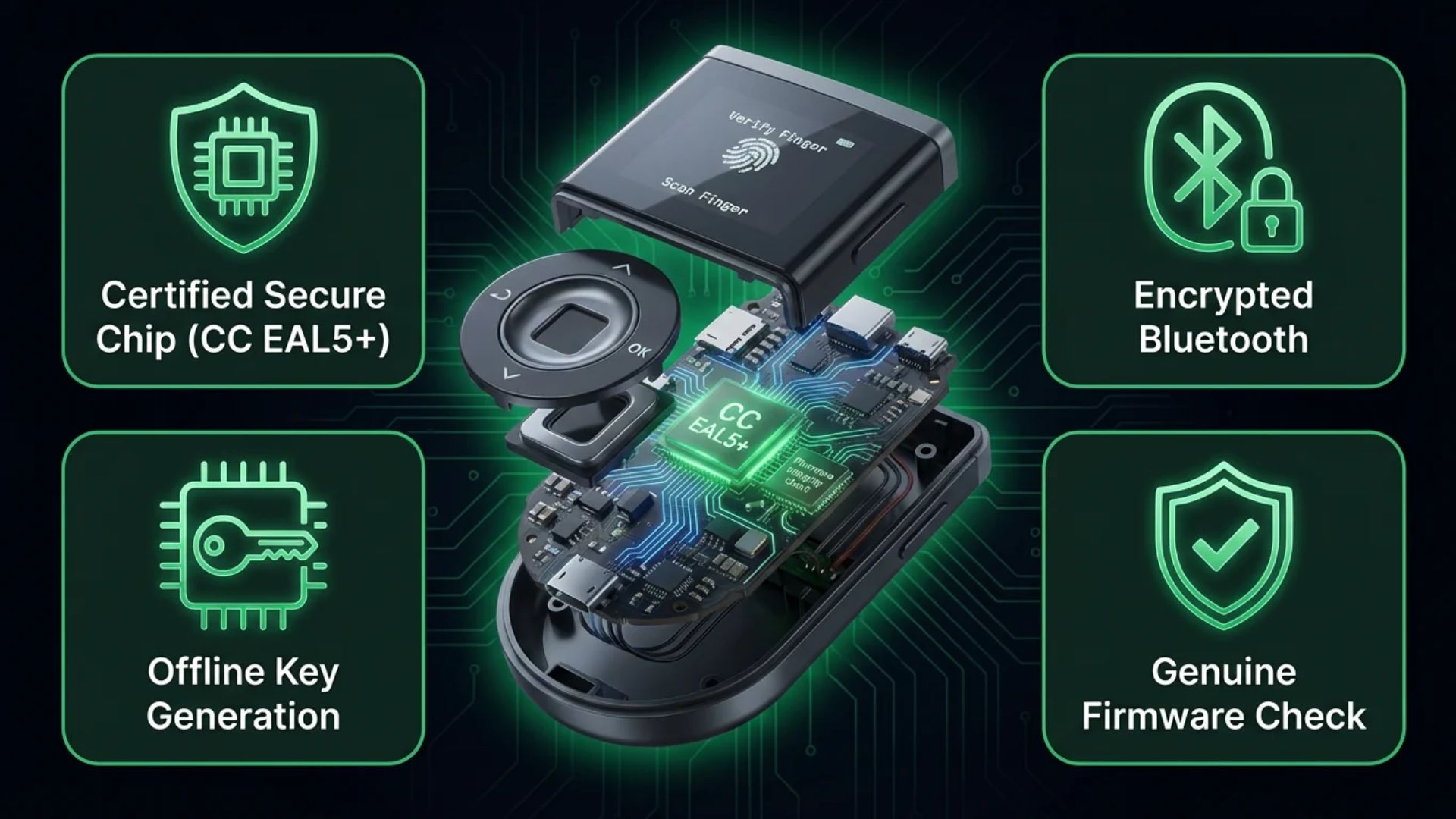
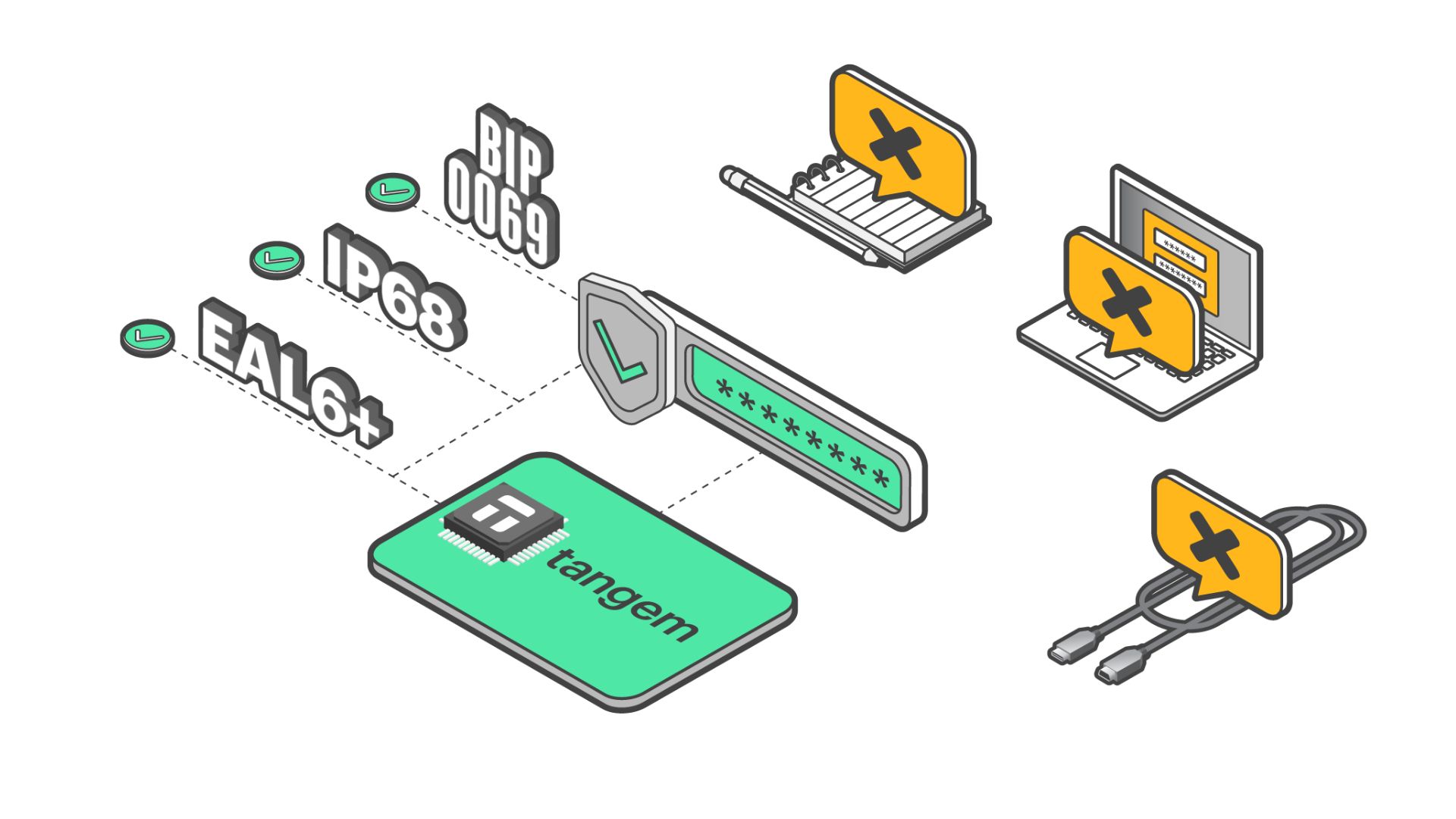
Common Criteria, for example, uses Evaluation Assurance Levels such as EAL5+ and EAL6+. These ratings describe the rigor of a particular evaluation under a defined security target and scope. They do not mean that every component of a consumer device has been independently proven secure against every conceivable attack.
For a hardware wallet, the useful question is therefore not simply whether an EAL number appears on a product page. It is worth checking what was actually evaluated, which component received the certification, what security claims were tested, and whether those claims correspond to the part of the device responsible for protecting private keys.
The same principle applies to security audits. An independent audit can provide valuable evidence about the code or architecture that was examined, but an audit is not a permanent guarantee. Firmware changes, newly discovered vulnerabilities, implementation mistakes, and supply-chain problems can introduce risks after an earlier assessment.
Certifications and audits are best viewed as pieces of evidence rather than as a universal safety label.
Firmware: The Software Layer Behind the Hardware
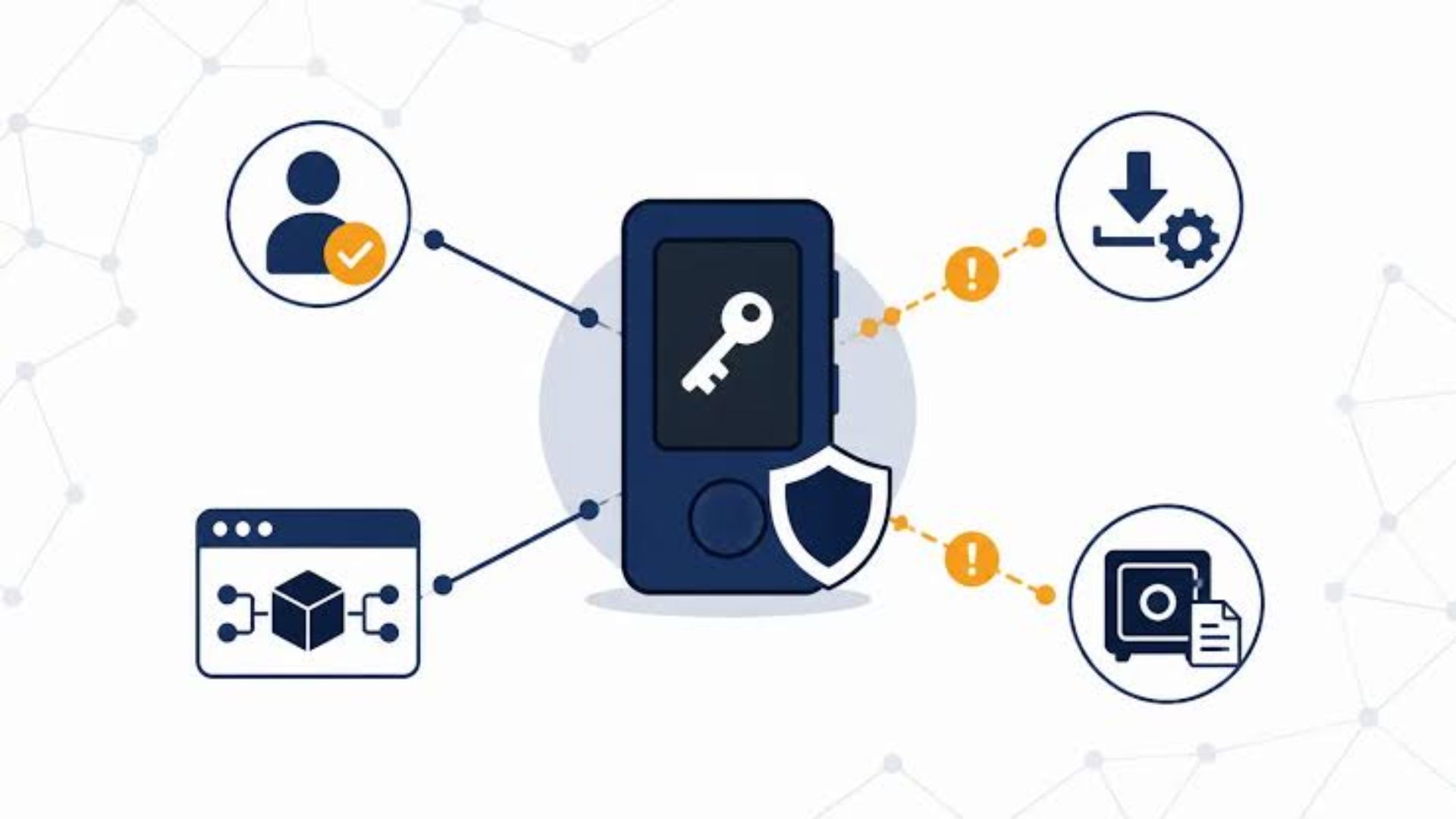
Strong hardware cannot compensate for poorly designed firmware. The firmware controls how the device handles key generation, transaction data, communication with companion applications, firmware updates, and other security-sensitive operations.
One important consideration is how randomness is generated when a wallet creates cryptographic keys. If the underlying entropy source is flawed, the resulting keys may be weaker than intended regardless of how impressive the physical security around the device looks. This is one reason secure random-number generation and careful implementation are fundamental parts of wallet design.
Firmware integrity is another major concern. A well-designed update system should authenticate new firmware before allowing it to run. Digital signatures can be used to verify that an update came from an authorized signing key and has not been modified in transit.
The exact architecture varies between manufacturers. Some projects publish substantial portions of their firmware source code, while other components may remain proprietary. Open source can improve independent inspection, but source availability alone does not prove that a device is secure. The implementation still needs careful review, secure build processes, sensible update mechanisms, and protection against supply-chain compromise.
A useful evaluation therefore considers several questions at once: Which parts of the firmware are public? Has the code undergone independent review? How are official releases signed? Can unauthorized firmware be installed? And what happens if a signing key or build system is compromised?
Transaction Verification and Blind Signing
The strongest private-key protection in the world cannot save a user who authorizes the wrong transaction.
This is where the device's screen and confirmation process become especially important. A connected computer or smartphone can display a transaction in whatever way its software chooses. The hardware wallet provides another opportunity to verify what is actually being authorized before the private key signs it.
Older devices with limited screens often made this difficult. Users could be presented with shortened addresses, hexadecimal data, or other technical information that was hard to interpret. In those situations, the user might effectively approve a transaction without being able to understand its important details. This is commonly described as blind signing.
The risk is particularly relevant when interacting with smart contracts. A transaction that looks harmless in a companion application may contain a contract call with consequences that are not obvious from a simple button label. Depending on the token and contract involved, an approval could grant spending authority, while another transaction could interact with a contract in an unexpected way.
A larger, clearer screen does not automatically eliminate these risks, but it can improve the user's ability to verify important information. Useful details may include the destination address, asset being transferred, amount, and relevant contract action when the device is capable of decoding it.
The underlying principle is simple: the final security decision should not depend entirely on information supplied by an untrusted host device.
Why Physical Confirmation Matters
Hardware wallets are designed to create a separation between the computer running the companion software and the device that controls the private key. The host can prepare or request a transaction, but the hardware wallet should require an explicit authorization before signing it.
Physical confirmation helps reinforce this boundary. If malware on a computer changes transaction details, the user should still have an opportunity to detect the discrepancy on the hardware wallet before approving the operation.
The exact hardware implementation varies. Some devices use physical buttons, while others use touchscreens or different input mechanisms. The important security property is not a particular button design. It is whether the trusted device gives the user a reliable way to review and explicitly authorize the transaction independently of the host computer.
This distinction becomes increasingly important as blockchain applications grow more complex. A hardware wallet should not merely protect a private key; it should also help the user understand what that key is being used to authorize.
Supply Chain Security Matters Too
A hardware wallet can be well designed and still face risks before it reaches its owner.
Supply-chain security covers the manufacturing, packaging, distribution, and delivery process. A compromised production environment, counterfeit product, modified device, or tampered package can undermine security assumptions before the wallet is even initialized.
Manufacturers use different approaches to reduce these risks. Depending on the product, these can include tamper-evident packaging, device authenticity checks, secure manufacturing procedures, signed firmware, and mechanisms that allow users to verify device integrity during setup.
Users should also be cautious about where a hardware wallet comes from. An unfamiliar seller or second-hand device introduces questions that cannot always be answered simply by inspecting the box. A security device should ideally have a verifiable origin and a setup process that does not require trusting unknown software or credentials supplied by another person.
A Practical Hardware Wallet Evaluation Framework
When comparing hardware wallets, a specification sheet is only the starting point. A more useful evaluation can be organized around several questions.
Chip architecture: Does the device use a Secure Element, a general-purpose microcontroller, or a combination of components? Which component actually protects sensitive key material?
Certification scope: If the manufacturer cites Common Criteria or another certification, what exactly was evaluated? Does the certification apply to the relevant security component or to a broader system?
Firmware transparency: Which parts of the firmware are open source? Are independent security reviews available? How are firmware updates authenticated?
Transaction visibility: Can the device show meaningful transaction information on its own screen, or does the user have to rely heavily on the connected computer?
Confirmation model: Does the hardware require an explicit user action before signing? Can malicious software on the host bypass that process?
Supply-chain controls: Is there a clear way to verify the product's origin and integrity during setup?
Recovery design: How does the device handle backups and recovery credentials? Does the setup process encourage users to keep sensitive recovery information offline and private?
Looking at these factors together gives a much clearer picture than relying on a single feature such as a secure chip, a certification number, or an “open source” label.
What a Hardware Wallet Cannot Protect Against
It is also important to understand the limits of hardware security.
A hardware wallet can protect private keys from many forms of malware on a connected computer, but it cannot prevent a user from deliberately approving a fraudulent transaction. It cannot determine whether an unfamiliar website is trustworthy simply because the transaction is presented on a secure screen. And it cannot make a recovery phrase safe if the user has already exposed that phrase to another person or entered it into a malicious website.
In other words, hardware security reduces certain classes of risk; it does not remove the need for careful transaction review.
The most useful approach is layered security. Keep recovery credentials private, verify software and websites, inspect transaction details on the trusted device, maintain appropriate firmware hygiene, and avoid assuming that a certification or security feature guarantees protection against every possible failure.
The Bigger Picture
Hardware wallet security is best understood as a system rather than a single component. Secure Elements can strengthen protection against certain physical attacks. Firmware controls how the device behaves. Signed updates can help prevent unauthorized software from being installed. A trusted display and explicit confirmation process can give users a better chance to catch manipulated transactions. Supply-chain controls help protect the device before it reaches its owner.
None of these layers is sufficient by itself.
That is also why hardware wallet comparisons should go beyond marketing claims. A secure chip may be valuable, but the surrounding architecture matters. Open-source firmware may improve transparency, but it does not automatically eliminate implementation risks. A large screen may make transactions easier to inspect, but it cannot stop a user from approving something they misunderstand.
For anyone evaluating a hardware wallet, the most useful question is not simply, “Does this device have a secure chip?” It is broader: How does the entire device protect keys, authenticate software, present transaction information, and keep the user in control of the final authorization?
That is where meaningful differences in hardware wallet security begin to emerge.
Filed under
More Stories