How Multisignature Wallets Work: Shared Control for Personal and Organizational Asset Security
A standard cryptocurrency wallet can put a remarkable amount of responsibility on one secret. If the private key or recovery material is lost, stolen, or exposed, the consequences can be difficult or impossible to reverse. That single-key model is simple, but simplicity also creates a weakness: one compromised credential can become a single point of failure.
Multisignature, or multisig, wallets approach the problem differently. Instead of requiring one key to authorize every transaction, they distribute signing authority across several independent keys and require a predefined number of those keys to approve a transaction. The result is less like handing one person the only key to a vault and more like dividing control among several authorized parties.
That model can be useful for individuals, families, businesses, nonprofit organizations, and other groups that need stronger controls around digital-asset custody. It does introduce additional operational complexity, though. Multisig is not simply “more secure” by default. Its security depends on how the quorum is designed, where the keys are stored, how signers coordinate, and what happens when something goes wrong.
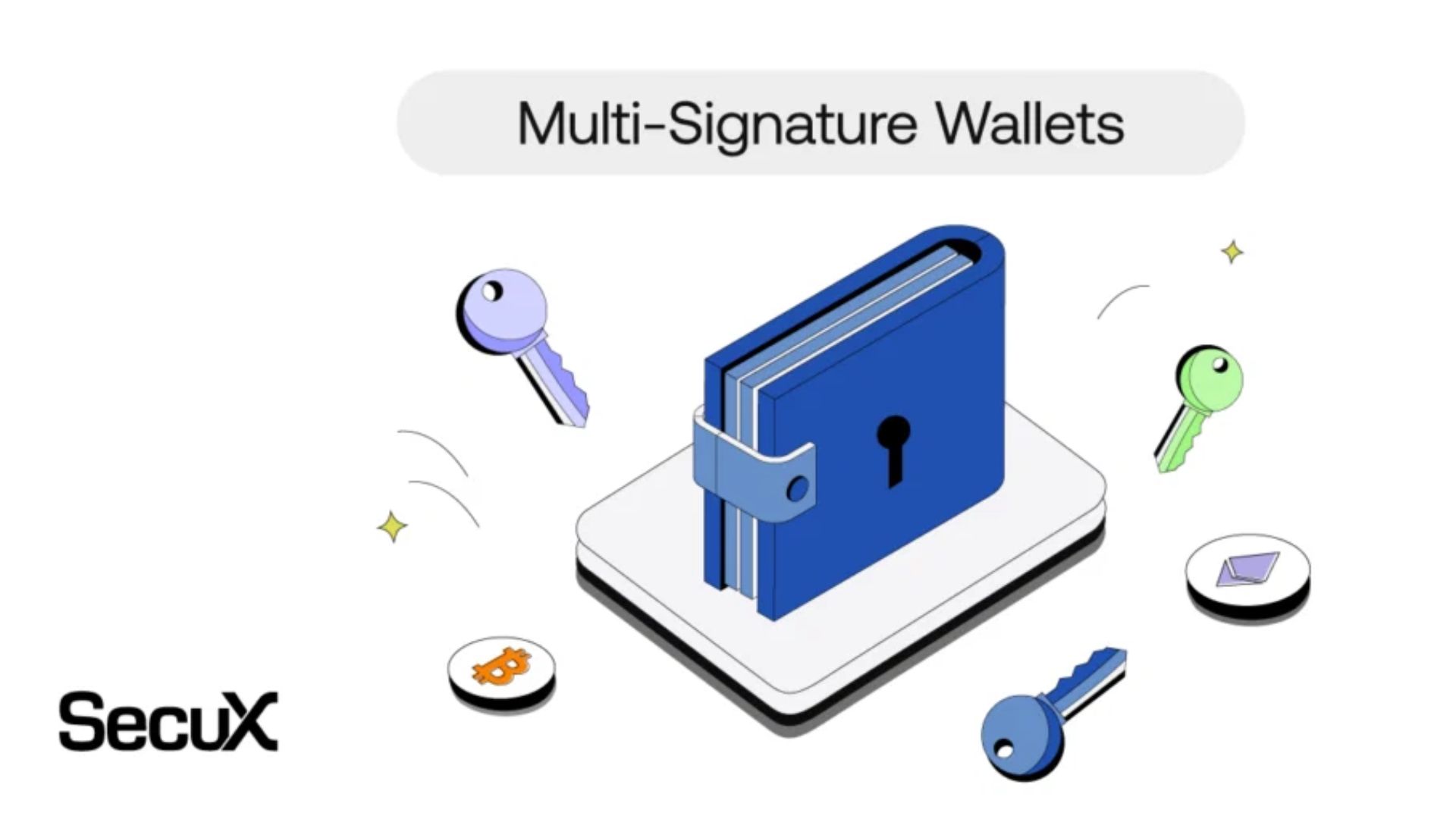
Understanding the M-of-N Model
The basic multisig concept is easier to understand through the M-of-N notation.
N represents the total number of authorized keys or signers associated with the wallet.
M represents the minimum number of valid signatures required before a transaction can be authorized.
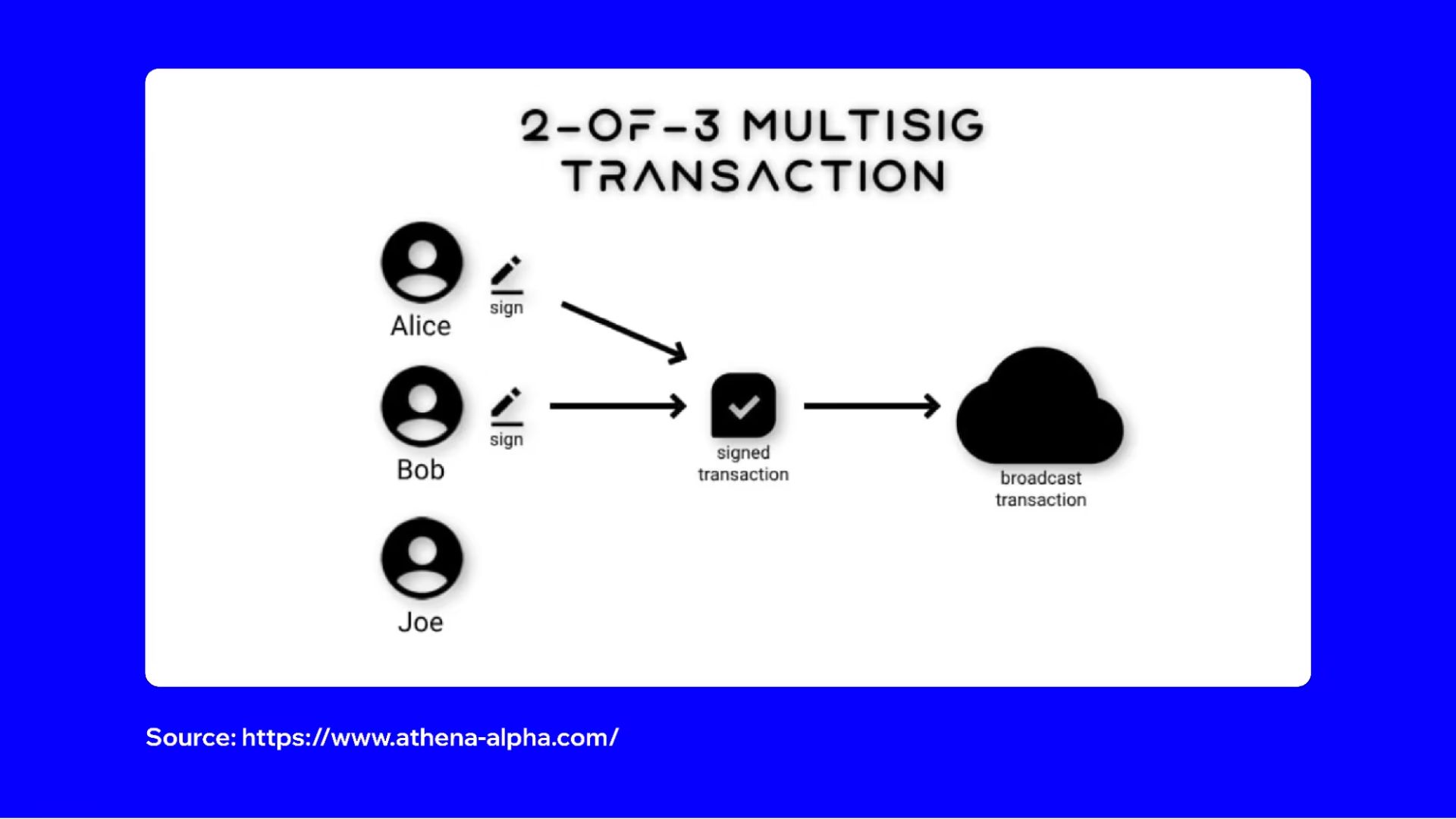
A 2-of-3 wallet, for example, has three authorized keys but requires any two of them to approve a transaction. Losing one key does not necessarily make the wallet unusable, because the remaining two can still satisfy the quorum. At the same time, compromising only one key should not be enough to move funds.
That combination of security and redundancy is one of the main reasons 2-of-3 configurations are popular. But the exact setup should match the situation. A business with several independent decision-makers might prefer a larger quorum, while an individual may want a simpler arrangement that is easier to maintain and recover.
The important point is that adding more keys does not automatically make a wallet safer. A complicated 5-of-9 arrangement can create its own operational problems if several signers lose access, leave an organization, forget recovery procedures, or become unavailable when a transaction is needed.
How Multisig Works on Different Blockchains
The concept of requiring multiple approvals exists across several blockchain ecosystems, but the technical implementation is not identical.
Bitcoin Multisig
Bitcoin supports multisignature spending conditions through its scripting system. One commonly used approach is Pay-to-Witness-Script-Hash, or P2WSH, where the spending conditions are represented by a script that specifies how many signatures are required.
Taproot introduced additional scripting and spending capabilities, including mechanisms that can improve the efficiency or privacy characteristics of certain multisig designs depending on how they are constructed and used. It should not be assumed, however, that every Taproot-based arrangement automatically provides the same privacy benefits.
The broader advantage of Bitcoin's approach is that the spending conditions are enforced by the Bitcoin network's consensus rules rather than by a separate multisig service. The exact privacy, fee, and transaction-size characteristics still depend on the particular construction.
Ethereum and EVM Networks
Ethereum and other EVM-compatible networks take a different approach. Multisig wallets are commonly implemented through smart contracts. Safe, formerly known as Gnosis Safe, is one well-known example of this model.
In a smart-contract multisig, the wallet itself is represented by contract logic that keeps track of authorized signers and the required threshold. A transaction can be proposed and signed by the appropriate parties, and once the required threshold is reached, the contract can execute the transaction according to its programmed rules.
This approach makes additional functionality possible. Depending on the implementation, a multisig contract can support features such as changing signers, managing modules, or applying more sophisticated authorization rules.
The trade-off is that the security model now depends not only on private-key management but also on the smart contract and the surrounding software infrastructure. A multisig design on an EVM network therefore has a different set of assumptions from a native Bitcoin multisig arrangement.
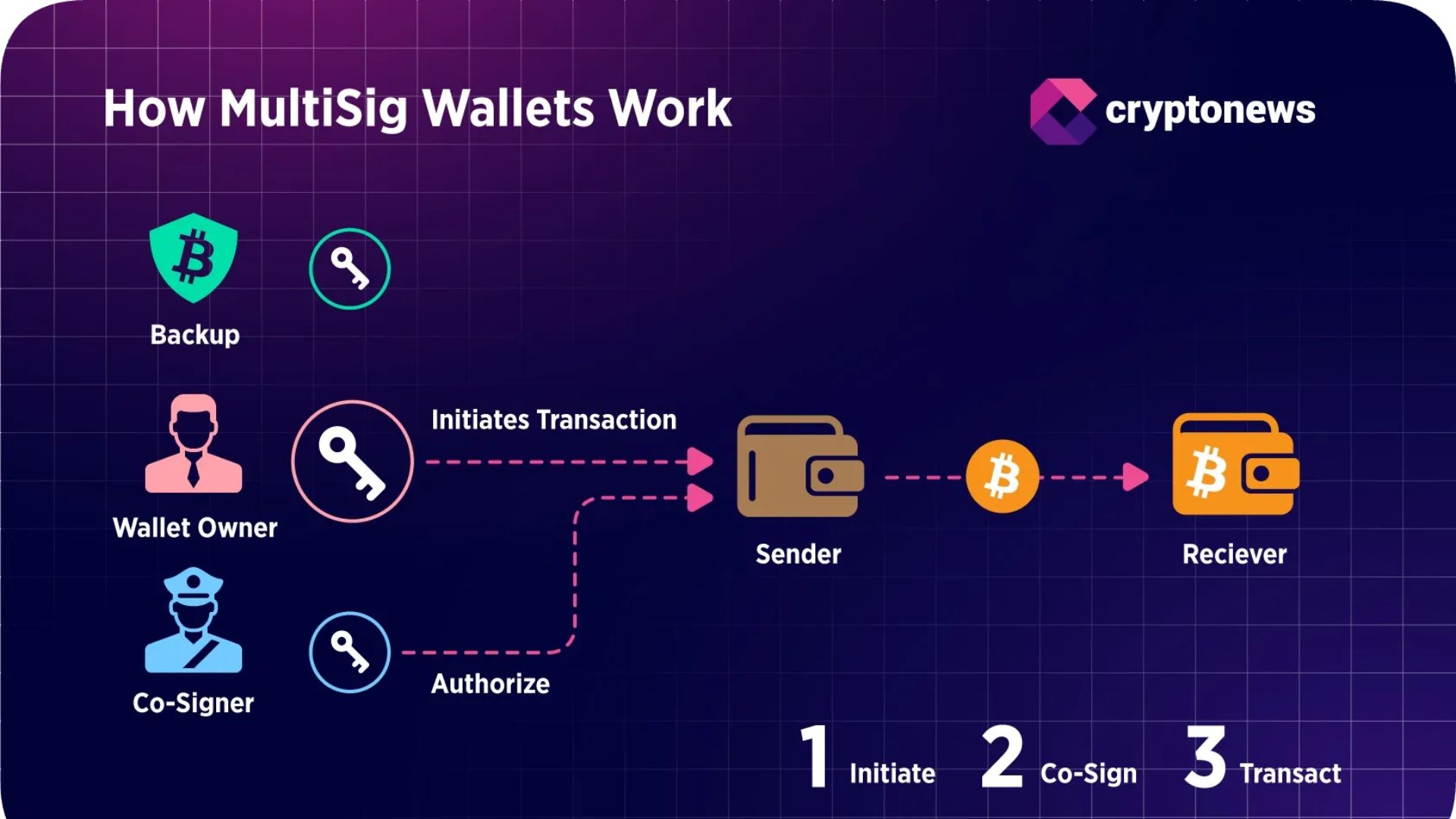
Collaborative Custody: Shared Responsibility Without Giving Up Control
Multisig can also be used to create collaborative custody arrangements. The idea is straightforward: the owner keeps control of enough keys to remain independent, while another party holds a separate key that can help with recovery or specific operational situations.
A common example is a 2-of-3 configuration. The user might keep two keys in separate physical locations while a third key is held by a professional custody or security provider.
Under a properly configured arrangement, the provider's single key is not enough to authorize a transaction on its own. The user retains enough signing authority to move assets without asking the provider to approve every transaction.
The additional key can nevertheless become useful when something goes wrong. If one user-controlled key is lost or a hardware device becomes unavailable, the remaining key and the provider's key may be enough to meet the signing threshold and move the assets into a new configuration.
This model can reduce the consequences of losing one key while avoiding a setup in which a third party has unilateral control. But it does not eliminate trust entirely. The user still needs to consider the provider's operational practices, recovery procedures, key-management policies, and ability to remain available when assistance is needed.
Collaborative custody is therefore better understood as shared risk management rather than as a magic combination of self-custody and institutional protection.
Multisig for Business and Organizational Treasury Management
The same principle becomes especially useful when multiple people are responsible for an organization's digital assets.
A single-key treasury can create uncomfortable questions. What happens if the person holding the key leaves the organization? What if their laptop is compromised? What if the key is lost, or if one employee becomes the only person capable of authorizing a payment?
Multisig can distribute that authority.
A company might, for example, establish a 3-of-5 arrangement involving several founders, executives, or other designated stakeholders. A transaction would require approval from at least three authorized signers rather than relying on one person's credentials.
This creates an on-chain layer of operational control. One compromised device does not automatically provide enough authority to move the treasury, assuming the other signers' keys remain secure.
The configuration still needs careful governance. Organizations should define who can sign, how signer changes are approved, where backup credentials are stored, what happens when an employee leaves, and how emergency recovery works. A technically strong wallet can become an organizational weakness if nobody knows how to operate it when circumstances change.
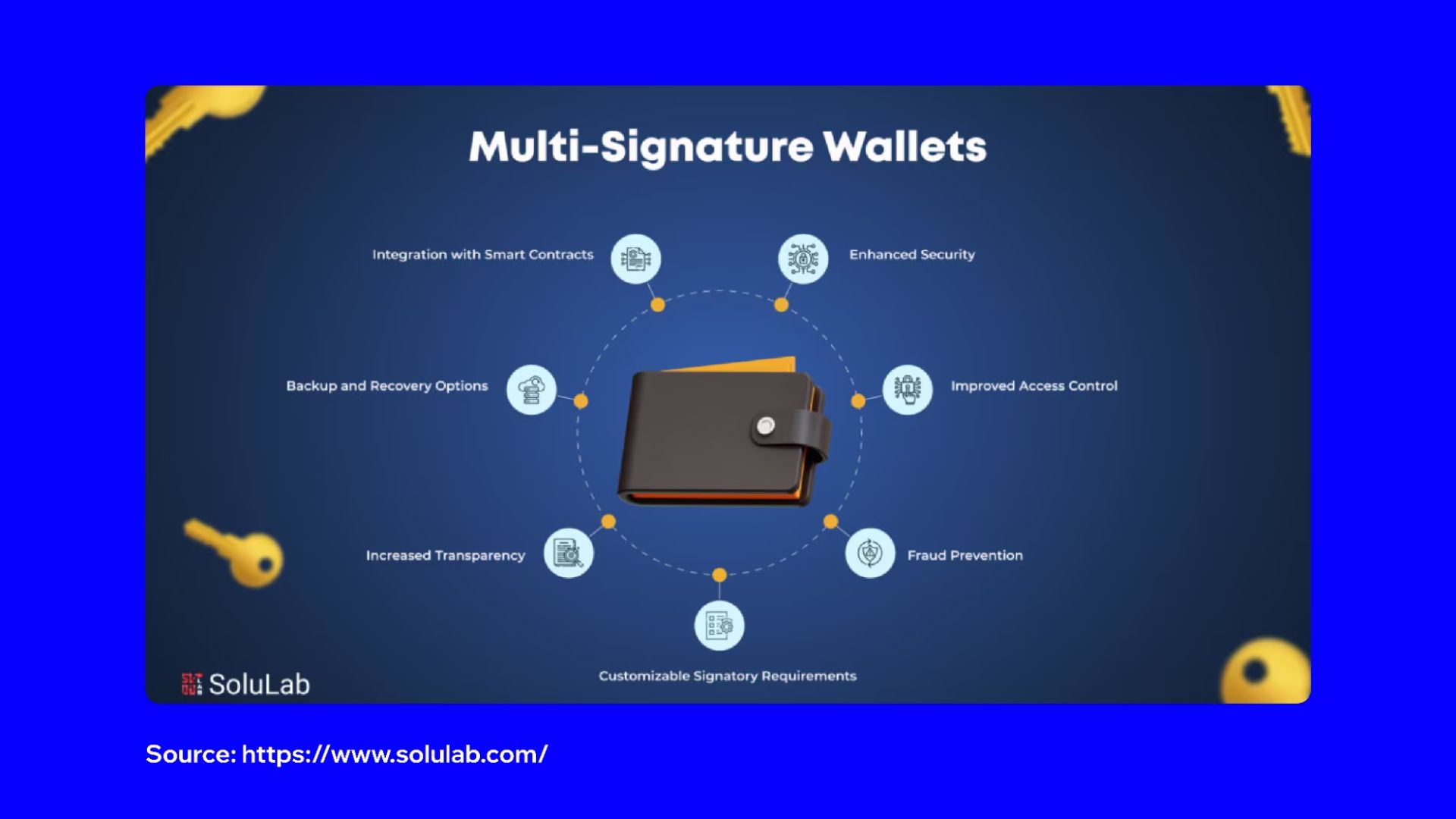
Key Distribution Matters as Much as the Quorum
The number of required signatures is only part of the security model. Where those keys are stored matters just as much.
Suppose all three keys in a 2-of-3 wallet are kept in the same office. A burglary, fire, flood, or other physical event could potentially affect the entire quorum. Splitting the keys across separate locations reduces that particular risk.
The same principle applies to digital exposure. If multiple signer keys are stored on devices that share the same computer, backup system, or credentials, one compromise could affect more than one signer.
Independence is therefore valuable. Different devices, locations, authentication methods, and recovery procedures can make it harder for one incident to compromise enough keys to satisfy the quorum.
There is a practical balance to strike, though. Excessive separation can make routine transactions cumbersome and recovery difficult. The goal is not maximum complexity. It is meaningful independence between the components that must remain secure.
What Happens When a Key Is Lost?
One of multisig's biggest advantages is also one of its easiest features to misunderstand.
In a 2-of-3 arrangement, losing one key does not necessarily mean losing access to the funds. The remaining two keys can still satisfy the threshold. But that does not mean the problem can be ignored indefinitely.
Once one key has been lost, the wallet is operating with less redundancy. If another key disappears before the wallet is reconfigured, the remaining signer count may fall below the required threshold.
For example, losing two keys from a 2-of-3 setup leaves only one key. That single key cannot satisfy the quorum, so the wallet may become unusable.
This makes recovery planning an essential part of multisig security. Key backups should be documented, tested where appropriate, and stored in a way that does not create a new single point of failure.
The Operational Trade-Offs
Multisig can reduce certain risks, but it introduces others.
Complexity is the most obvious. Instead of protecting one recovery credential, the owner needs a plan for several keys, devices, backups, and signers.
Coordination can also become an issue. A transaction that once required one person may now require several people to participate. That is useful for governance, but inconvenient when immediate action is needed.
Recovery needs more planning. Organizations must know what happens when a signer becomes unavailable, leaves the company, or loses a key.
Software dependencies matter as well, particularly for smart-contract multisig systems. A wallet's security depends not only on signer keys but also on the contract logic and software used to interact with it.
Privacy can vary by blockchain and implementation. Some multisig structures reveal information about the spending arrangement, while other designs can reduce the amount of information visible on-chain. The privacy characteristics should therefore be evaluated based on the actual construction rather than the word “multisig” alone.
These trade-offs do not make multisig a poor choice. They simply show why the configuration needs to be designed around the user's actual risk model.
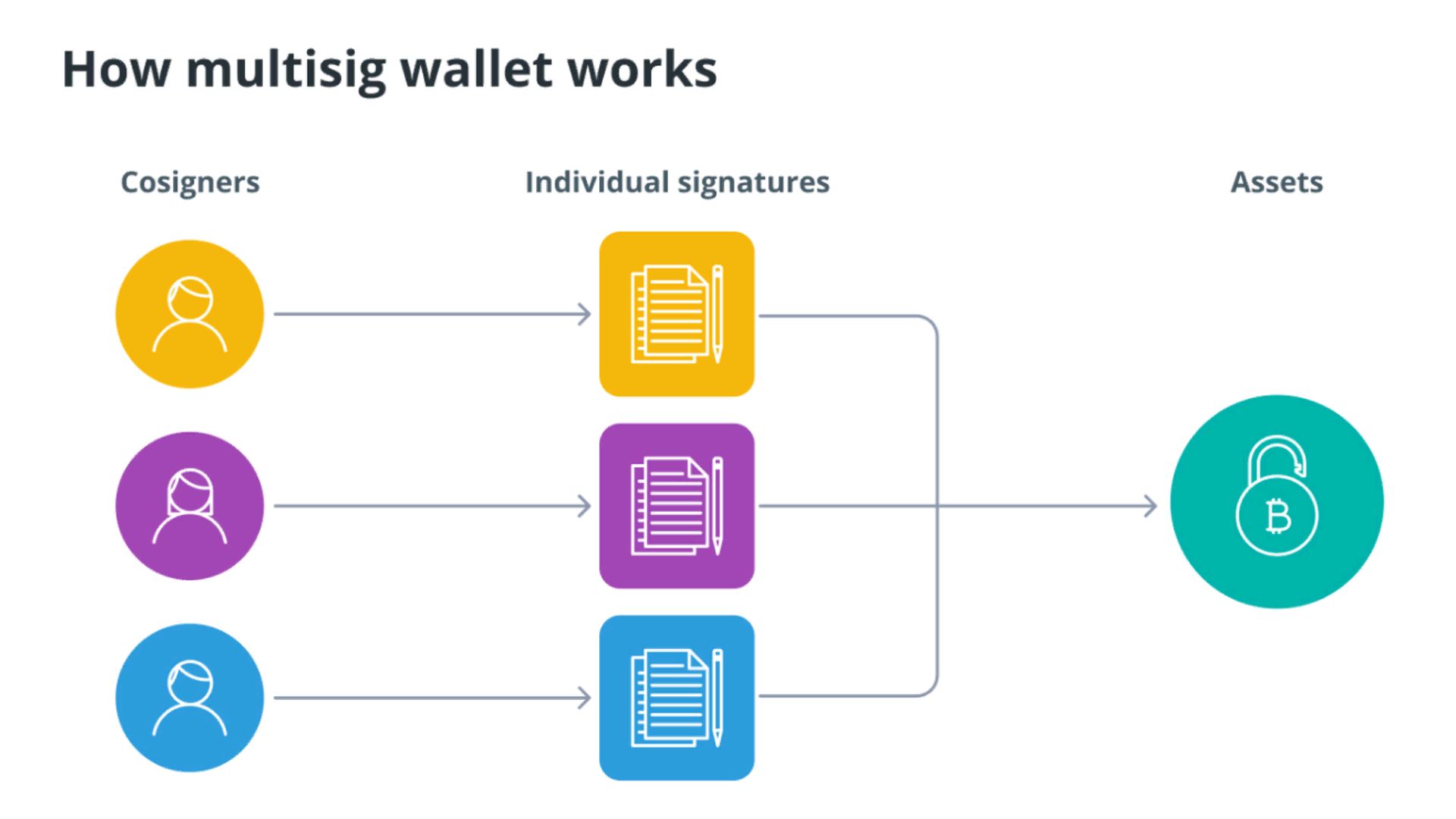
A Practical Multisig Evaluation Framework
Before adopting a multisig wallet, several questions deserve attention.
What is the quorum?
Does the M-of-N configuration provide enough protection against a compromised key without making recovery unnecessarily difficult?
Where are the keys stored?
Are they separated across different devices and physical locations, or could one incident affect several of them?
Who controls each key?
For organizational wallets, are the signers genuinely independent, or do several keys ultimately depend on the same person or infrastructure?
What happens if a signer disappears?
Is there a documented process for replacing a signer or moving funds to a new configuration?
What happens if a key is compromised?
Can the wallet be reorganized before an attacker obtains enough signatures to meet the threshold?
Does the wallet rely on smart contracts?
If so, what contract and software components form part of the security model?
Has the recovery process been considered in advance?
A multisig setup is much easier to trust when the owner already knows how a lost key, unavailable signer, or organizational change will be handled.
These questions are often more useful than asking whether a wallet is simply “secure.” Security is not a product label. It is the result of how the entire custody system is designed and operated.
Multisig Is a Control System, Not a Guarantee
The strongest case for multisig is not that it makes digital assets invulnerable. It does not.
Its real value is that it changes the consequences of a single mistake. One stolen key may no longer be enough. One lost device may not destroy access. One employee's compromised computer may not provide sufficient authority to drain an organizational treasury.
At the same time, multisig introduces its own failure modes. Poorly distributed keys, forgotten backups, unavailable signers, flawed recovery procedures, or vulnerable smart contracts can create serious problems.
The best multisig design is therefore the one that matches the actual people, assets, technology, and risks involved. For an individual, that might mean a carefully separated 2-of-3 arrangement. For an organization, it could involve a larger quorum with clearly documented governance and signer replacement procedures.
The underlying idea remains simple: do not make one secret, one device, or one person responsible for everything.
By distributing authorization while planning carefully for recovery and operational changes, multisig can turn cryptocurrency custody from a single-key responsibility into a more resilient system of shared control.
Filed under
More Stories