Automating Household Finance: Building a Low-Maintenance Money Management System
Managing household money can easily become a second job. There are bills to remember, transfers to make, savings goals to fund, subscriptions to monitor, and transactions to review. Keeping track of everything manually may work for a short period, especially when trying to understand where money is going, but it can become exhausting when the same tasks have to be repeated month after month.
That is where automation can help. Instead of depending on memory and willpower for every routine transaction, a household can turn predictable financial decisions into scheduled transfers, automatic bill payments, and recurring savings contributions. The goal is not to make finances completely hands-off. Some oversight will always be necessary. The goal is to remove as much repetitive work as possible so that attention can be reserved for decisions that actually require judgment.
A well-designed system should quietly handle routine obligations while making it easy to see what is happening. Once the basic rules are in place, managing money becomes less about remembering dozens of small tasks and more about checking that the system still fits the household's current situation.
Automate the Routine, Not the Oversight
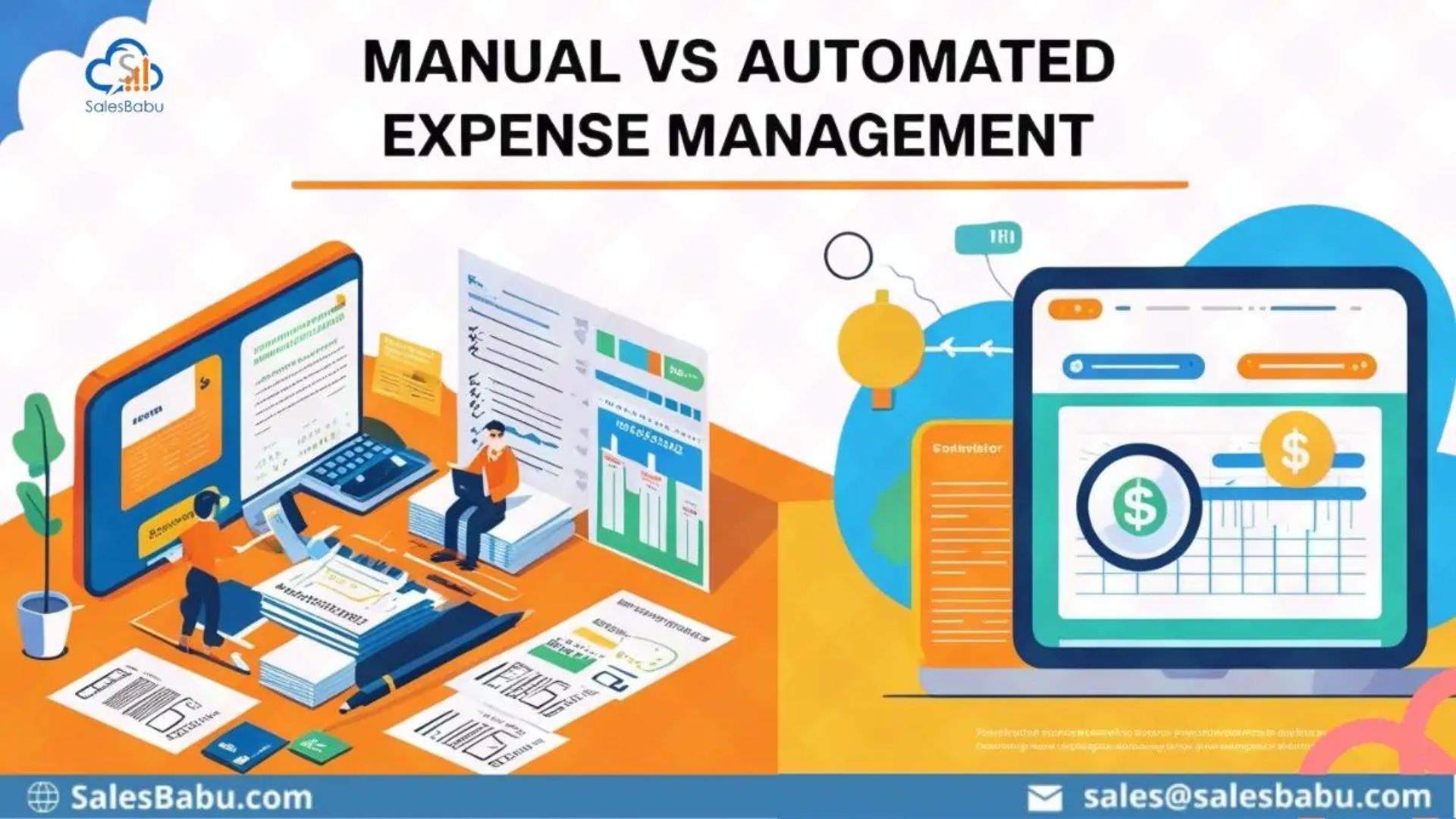
Manual money management depends heavily on remembering what needs to happen and when. A paycheck arrives, bills come due, savings need to be transferred, and account balances have to be checked. Every additional task creates another opportunity for something to be forgotten.
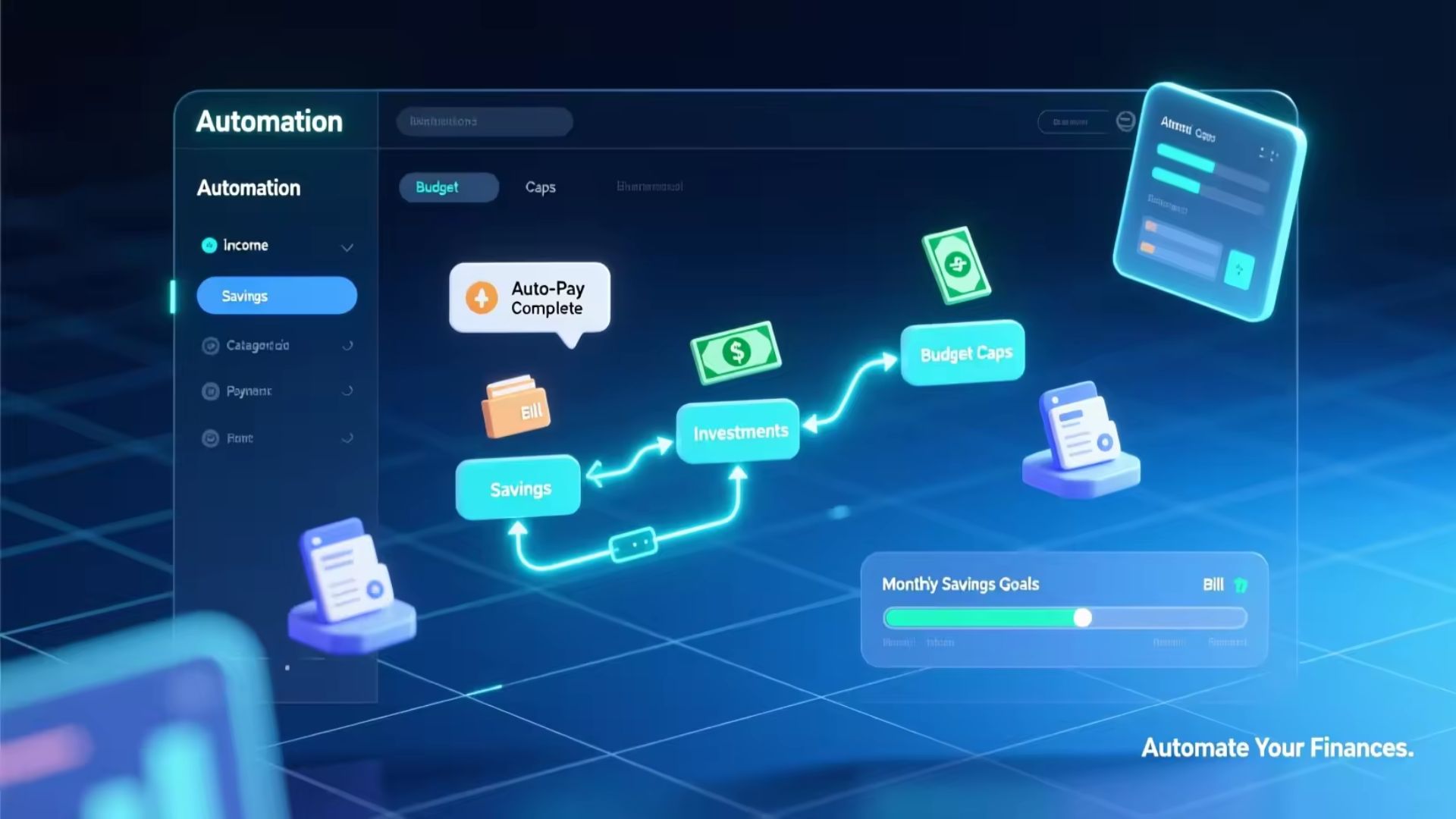
Automation changes that process. Recurring bills can be scheduled, savings transfers can happen automatically, and income can be divided between different financial priorities without requiring a new decision every payday.
The key is to automate predictable actions while keeping important financial decisions visible.
For example, a household might automatically move money toward savings shortly after income arrives, then use the remaining balance for everyday expenses. That creates a natural spending boundary without requiring the person to calculate the same allocation from scratch every month.
Automation works best as a support system, not as a substitute for awareness.
Layer 1: Automate Recurring Bills and Regular Payments
Fixed expenses are often the easiest place to start because the amounts and due dates are relatively predictable.
Rent or mortgage payments, insurance premiums, utilities, subscription services, and other recurring obligations can often be scheduled in advance. Automating them reduces the chance of forgetting a deadline and makes monthly cash flow easier to anticipate.
Set Up Automatic Payments Carefully
Many lenders and service providers offer automatic payment options through bank accounts or cards. Before activating them, however, make sure the payment schedule fits the household's cash flow.
If several large payments are scheduled around the same time, an otherwise well-funded account could temporarily run short. Where providers allow it, adjusting due dates may help spread major obligations across the month.
It is also worth keeping track of which account funds each payment. A long list of automatic withdrawals can become difficult to understand when the household has several checking and savings accounts.
A simple payment calendar or account list can make the system much easier to audit.
Be Careful With Credit Card Autopay
Automatic credit card payments can be useful, but the right setting depends on the household's cash position.
For someone who routinely keeps enough money available to cover the entire statement balance, automatic payment of that balance can reduce the risk of accidentally carrying a balance because a payment was forgotten.
The account should still be monitored. An automatic payment is not helpful if it causes a cash shortfall or catches an outdated account balance by surprise.
Households that are already carrying balances or dealing with irregular income may need a different approach. The important thing is to understand exactly what the automatic payment will do before turning it on.
Layer 2: Automate Savings and Irregular Expenses
Saving manually can be difficult because available cash feels available to spend. A transfer made automatically shortly after income arrives can create a useful separation between money intended for current expenses and money intended for the future.
Use Separate Buckets When They Make Things Clearer
Many banks offer multiple savings accounts, sub-accounts, or other ways to separate money by purpose. The exact setup is less important than whether it makes the household's finances easier to understand.
For example, savings might be divided between:
An emergency or cash reserve
Irregular household expenses
Vehicle or home maintenance
Annual insurance or other recurring costs
Longer-term financial goals
The categories should reflect actual household needs rather than becoming a complicated collection of accounts that requires constant maintenance.
Schedule Transfers Around Income
A recurring transfer can be scheduled shortly after a paycheck or other predictable income arrives. Before choosing the amount, make sure enough money remains in the operating account for upcoming bills and ordinary expenses.
This is an important difference between useful automation and blind automation. A transfer that worked when income was higher may become inappropriate after a pay cut, a change in work hours, or a new recurring expense.
Automatic savings should therefore be reviewed whenever household income or major expenses change.
Layer 3: Choose Financial Technology Carefully
Financial technology can make account management easier, but adding more apps does not automatically create a better system.
In fact, too many disconnected tools can make household finances harder to understand.
Focus on Useful Functions
Account-aggregation tools can bring information from multiple financial institutions into one dashboard. That can be convenient for households with several bank accounts, credit cards, or investment accounts.
Budgeting tools can also categorize transactions and provide spending summaries. Some services offer additional features such as savings rules or automatic transfers.
The important question is whether a tool removes work or creates another system that needs to be maintained.
A simple setup may be enough: a primary bank, a small number of savings accounts, and one budgeting or account-viewing tool if needed. There is little benefit in maintaining five different financial apps that all perform overlapping jobs.
Review Security and Privacy Before Connecting Accounts
Connecting a financial account to a third-party service deserves more attention than downloading an ordinary shopping or entertainment app.
Before linking an account, review the provider's security documentation, privacy policy, authentication options, and the type of access being requested. If the service offers stronger authentication methods such as multi-factor authentication, consider enabling them.
Do not assume that a familiar-looking financial app is automatically trustworthy. Download applications from reputable sources, check the provider's identity, and understand what information the service collects and how it is used.
It is also worth reviewing connected services periodically. If an application is no longer being used, consider whether its access should remain active.
Security is not something that can be automated once and forgotten.

Layer 4: Build a System That Can Survive Changes
A financial automation system can look perfect until something changes.
A paycheck increases. A job ends. A bill rises. A bank account closes. An insurance premium changes. A subscription quietly increases its price.
That is why the best systems include regular review points.
Check the System Every Few Months
A short review every few months can catch problems before they become expensive.
Look at:
Income: Has the household's income changed?
Automatic transfers: Are savings contributions still realistic?
Recurring payments: Are any bills higher than expected?
Subscriptions: Are there services that are no longer being used?
Savings goals: Do current contributions still match upcoming expenses?
Account connections: Are all linked financial services still necessary?
The purpose of the review is not to recreate the entire budget. It is to confirm that the automated rules still reflect reality.
Watch for Lifestyle Creep
Income increases can create another problem: automatic spending increases.
When a household receives a raise, it is easy for larger discretionary purchases to become part of the normal monthly routine. If savings contributions remain unchanged while spending expands, the financial benefit of the higher income can disappear quickly.
One solution is to increase savings or other long-term allocations when income rises, before the additional money becomes part of the regular spending pattern.
That does not mean every raise has to be saved. It simply prevents every increase in income from automatically turning into a permanent increase in expenses.
Keep a Manual Backup
Even a highly automated financial system needs a fallback plan.
Keep a current record of important account information, recurring payments, and major financial obligations. Know which accounts fund which bills. Review bank statements and transaction alerts rather than assuming every automatic payment will work correctly forever.
It is also useful to know what happens if a payment fails, an account is frozen, a card expires, or income arrives late.
Automation reduces repetitive work. It does not eliminate the need to notice when something has gone wrong.
The Goal Is Low Maintenance, Not No Maintenance
Household finance does not need to involve daily spreadsheet updates or constant monitoring of small transactions.
The better goal is a system that handles predictable tasks automatically while leaving people responsible for the decisions that actually matter.
Recurring bills can be scheduled. Savings can move automatically. Irregular expenses can be funded gradually. Financial apps can consolidate information when they genuinely make the process easier.
Then, every few months, the household can step back and ask a simple question: Does this system still match the way our money works today?
If the answer is yes, there is little reason to interfere with it. If income, expenses, or priorities have changed, the automated rules can be adjusted.
That is the real advantage of financial automation. It does not promise a completely hands-off household. It creates a quieter system in which routine money management happens in the background, while human attention stays focused on the financial decisions that cannot—and should not—be automated.
Filed under
More Stories