Mastering the Trinity of Expenses: Fixed, Variable, and Irregular
Many household budgets become difficult to maintain because they assume expenses arrive in neat, predictable monthly cycles. A typical budget template lists income, subtracts recurring bills, assigns an amount to groceries and other spending, and leaves very little room for what happens outside that pattern.
Then real life gets involved. A car needs maintenance. Electricity costs more during a particularly hot month. An insurance premium changes at renewal. None of these events necessarily means the household has lost control of its finances, but a rigid budget can make them feel like failures.
A more useful approach starts with how expenses actually behave. Instead of looking only at the dollar amount, consider the timing and predictability of each cost. Fixed expenses tend to remain stable. Variable expenses occur regularly but change in amount. Irregular expenses may appear only a few times a year, yet they can often be anticipated well in advance.
Separating those three categories creates a more flexible way to plan household spending. The goal is not to predict every expense perfectly. It is to make predictable changes easier to absorb.
Fixed Expenses Are Not Always Permanent
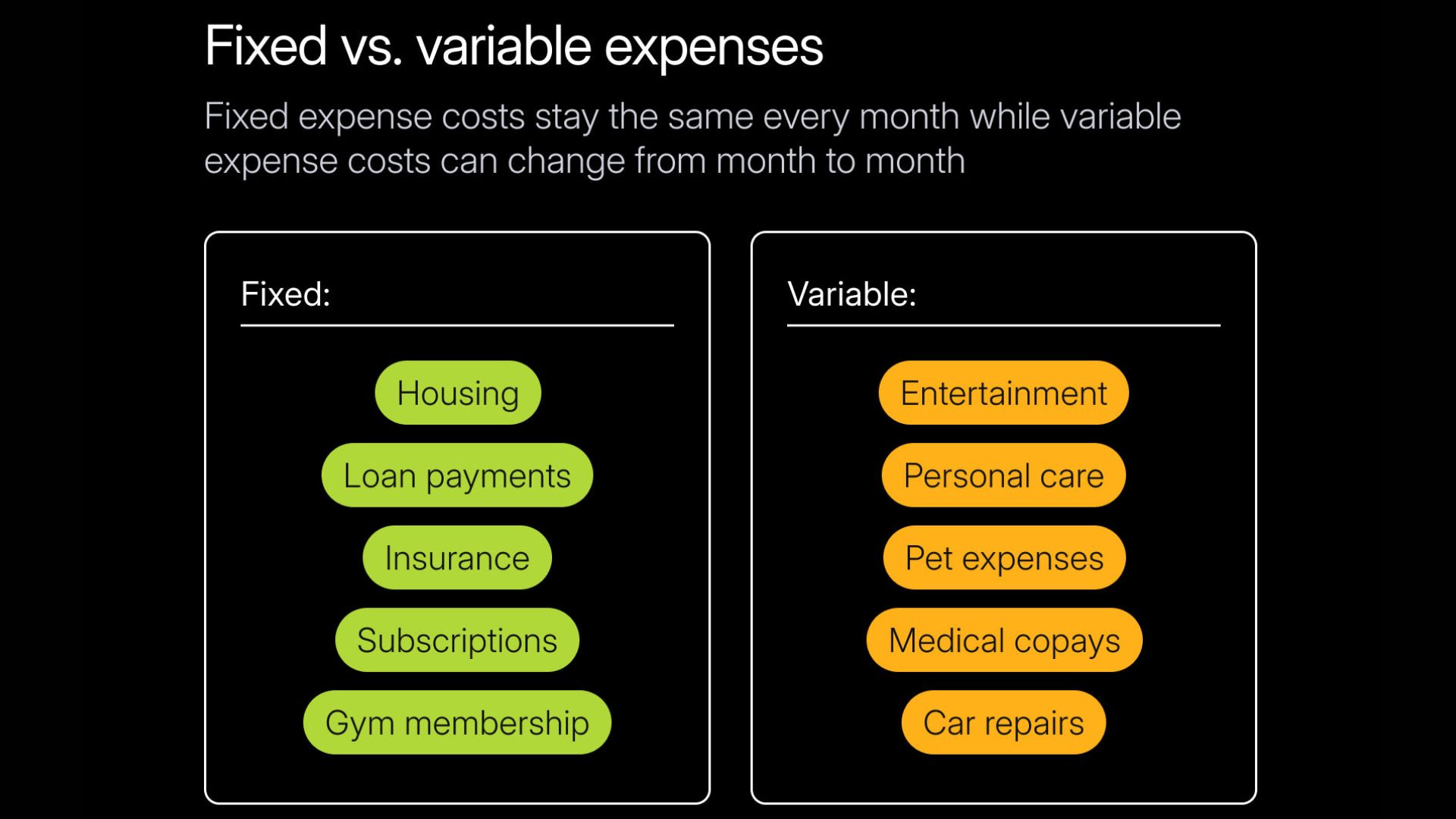
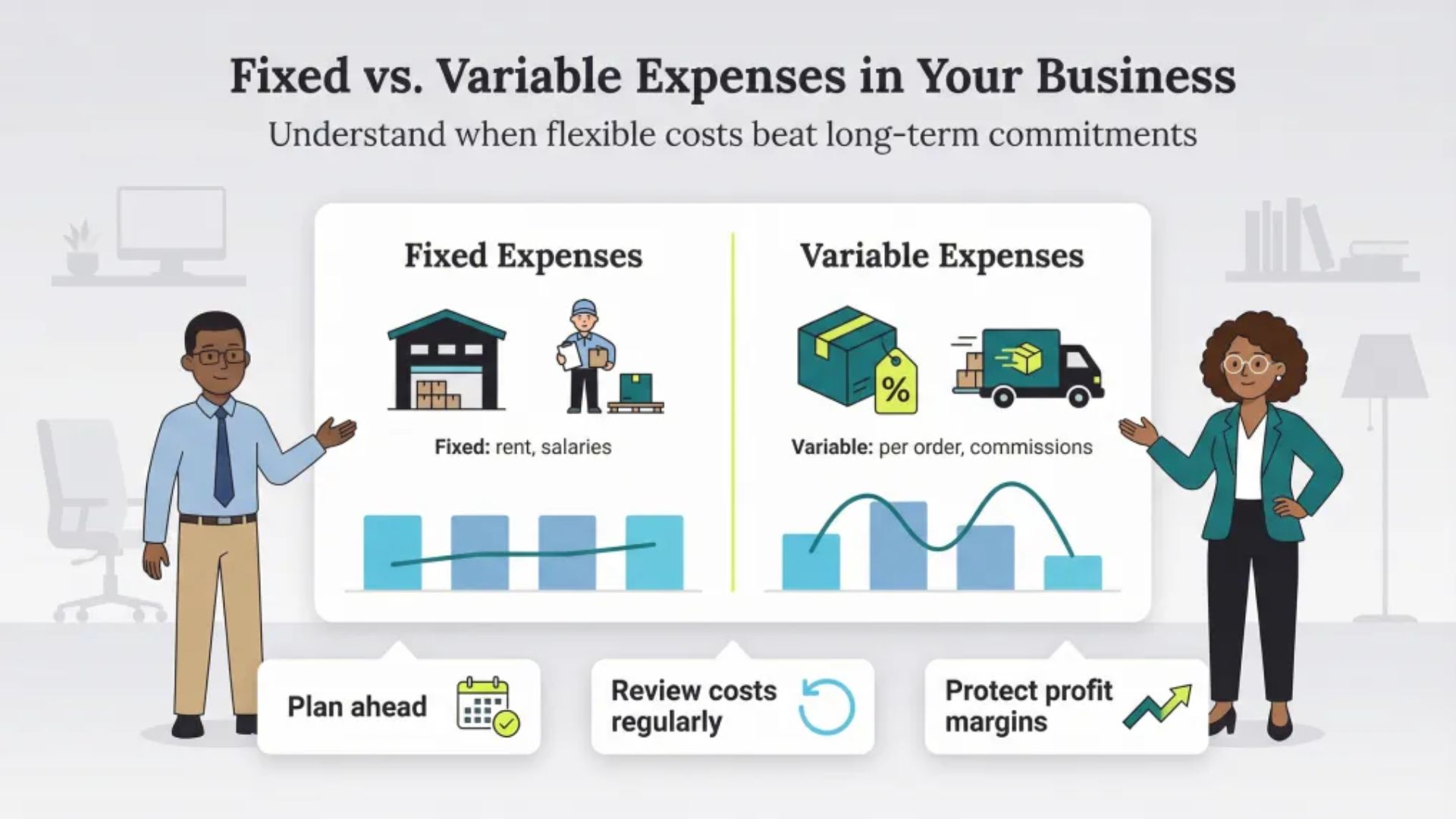
Fixed expenses provide the foundation of a household budget. They usually recur on a regular schedule and tend to remain relatively stable from one payment period to the next. Rent or mortgage payments, loan payments, insurance premiums and certain subscription services are common examples.
Because these expenses are familiar, they are easy to treat as permanent fixtures. That can be a mistake.
A payment that has remained unchanged for two years may not stay that way forever. Insurance premiums can change at renewal. A lease can expire. A promotional rate on a subscription can end. Property-related expenses may also change over time.
That is why fixed does not necessarily mean permanent. It usually means predictable for the current planning period.
Fixed expenses also deserve attention because they are difficult to adjust quickly. Cutting restaurant spending can happen within days; reducing a mortgage payment generally cannot. The more income that is committed to these obligations, the less flexibility remains elsewhere in the budget.
A practical habit is to review fixed expenses periodically rather than simply assuming they will remain unchanged. An annual review can catch expired promotions, changed premiums, unused subscriptions and other forms of cost creep before they become part of the household's normal baseline.
Variable Expenses Need Boundaries, Not Perfect Predictions
Variable expenses are different. They occur regularly, but the amount changes according to consumption, behavior, prices or circumstances.
Groceries are a straightforward example. The household may buy food every week, but the total can change because of food prices, household size, meal choices or how often meals are prepared at home. Fuel and utility bills behave similarly. Electricity use can rise during periods of extreme weather, while fuel costs can change with both driving patterns and market prices.
The challenge is that variable expenses are easy to underestimate when a budget is built around an ideal number rather than actual spending.
Suppose a household decides that groceries should cost $600 a month. If actual spending reaches $625 because food prices increased or the month included several larger grocery trips, a rigid budget may label the difference as overspending. A more useful system asks whether $625 is unusual or simply a better reflection of the household's current spending pattern.
Historical data can help answer that question.
Reviewing several months of bank or credit-card statements can reveal a realistic range rather than a single target. The purpose is not to justify every purchase. It is to understand normal variation.
For expenses that change with the seasons, a rolling average can be useful. If electricity costs more during the hottest months, the household can account for that increase before summer arrives instead of treating the higher bill as an unexpected financial event.
The same idea applies to fuel, heating, cooling and other recurring costs that move with circumstances.
A variable expense does not need to be perfectly predictable to be manageable. It simply needs a reasonable range.
Irregular Expenses Should Not Automatically Become Emergencies
Irregular expenses are often the category that causes the most disruption.
They may not appear every month, but many can be anticipated over a longer period. Vehicle registration, annual insurance payments, property taxes, holiday spending, school-related purchases, home maintenance and certain recurring medical or dental expenses are examples.
The important distinction is between unusual and unpredictable.
A cost can be infrequent without being a genuine emergency. A vehicle may need maintenance after several years. An annual bill may arrive once a year. A household may know that certain expenses occur periodically even if it cannot predict the exact date or amount months in advance.
That is where sinking funds become useful.
A sinking fund is simply money set aside gradually for a known future expense. The calculation is straightforward: estimate the expected cost and divide it across the number of months available to prepare.
For example, suppose a household expects a $1,200 annual expense. Setting aside approximately $100 per month would build the full amount over twelve months. The money can be kept in a separate savings sub-account or another suitable liquid account, depending on the household's banking setup.
The exact numbers are not the important part. The principle is.
Instead of waiting for a $1,200 bill and treating it as a crisis, the household spreads the financial impact across the months leading up to it.
The same approach can be applied to vehicle maintenance, annual subscriptions, property-related costs, seasonal purchases and other expenses that are irregular but reasonably foreseeable.
This also protects an emergency fund from being used for ordinary life events. An emergency reserve is generally more useful when it remains available for genuinely unexpected disruptions rather than predictable expenses that simply happen less frequently.
Building the Three Categories Into a Working Budget
Once expenses are classified, the categories can be used to organize the household's cash flow.
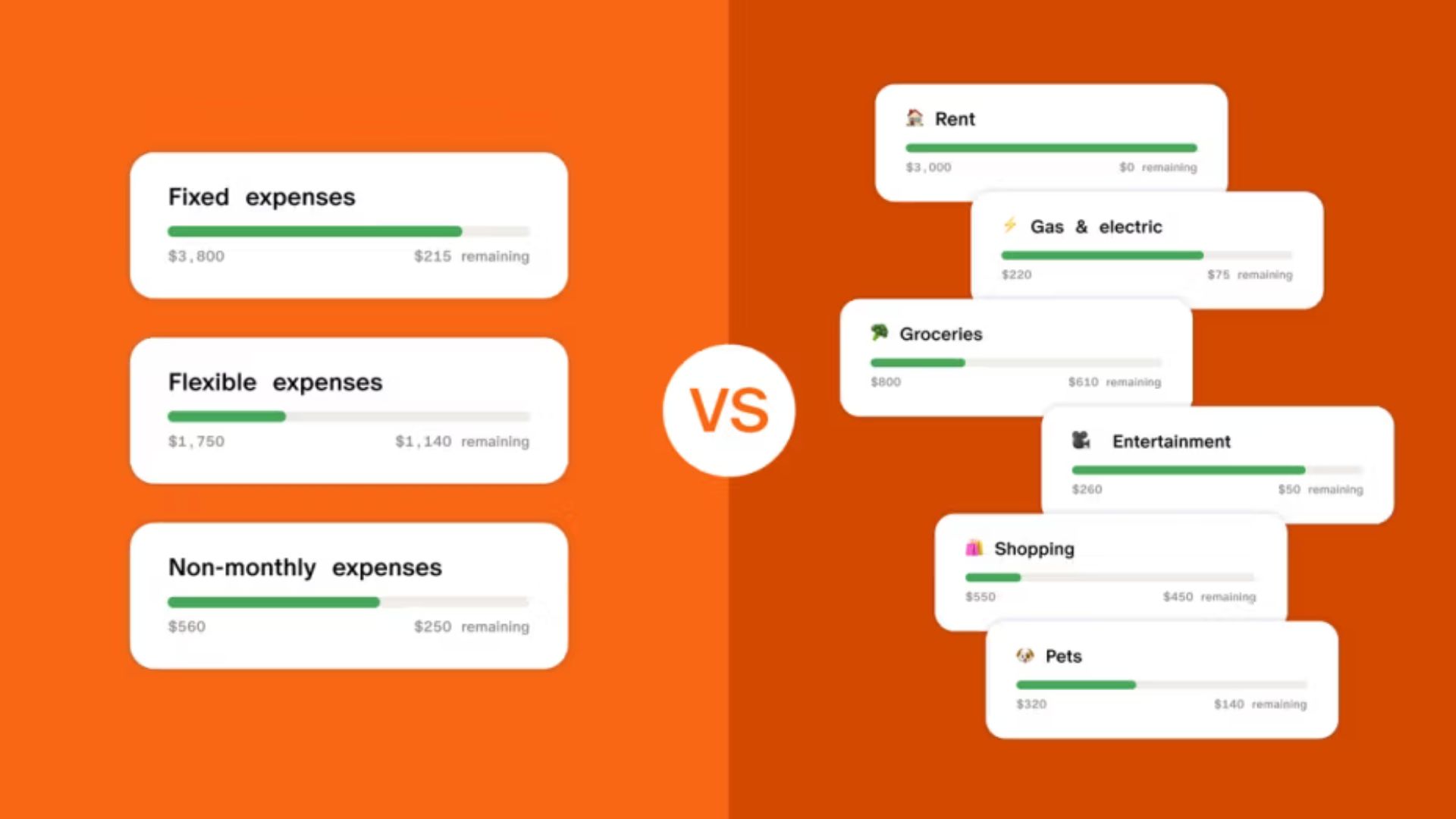
Fixed expenses provide the baseline. They tell the household how much income is already committed to recurring obligations.
Variable expenses require a spending range. Instead of insisting that groceries, fuel or utilities hit one exact number every month, the budget can allow for normal movement.
Irregular expenses require advance funding. Sinking funds convert occasional large payments into smaller, more manageable allocations over time.
The three categories therefore solve different problems.
Fixed expenses answer: What commitments are already built into the month?
Variable expenses answer: Where can spending naturally move up or down?
Irregular expenses answer: What costs are not monthly, but can still be anticipated?
That distinction can make a checking-account balance easier to interpret. A balance of $2,000 is not automatically $2,000 of available spending money if part of it has already been reserved for an upcoming annual bill.
A household can therefore organize incoming money in stages. Fixed obligations can be accounted for first. Known irregular expenses can be funded through their sinking funds. The remaining amount can then support variable and discretionary spending according to the household's priorities.
The precise order does not have to be identical for every household. Someone with a different income pattern, debt structure or savings goal may choose another sequence.
What matters is that money assigned to future obligations is not mistaken for freely available cash.

A Simple Way to Start
There is no need to redesign an entire financial system overnight.
Start by reviewing several months of actual transactions. Look for expenses that repeat at roughly the same amount, expenses that repeat but fluctuate, and expenses that appear only occasionally.
Then make three lists.
Fixed: recurring obligations that are relatively stable.
Variable: recurring expenses whose amounts change.
Irregular: expenses that occur periodically or unpredictably but can be planned for to some degree.
The third category deserves particular attention. Ask whether each irregular expense is genuinely unexpected or simply infrequent.
That question alone can reveal several places where a budget is relying too heavily on an emergency fund.
Once the categories are clear, estimate realistic amounts. Use actual spending history where possible rather than choosing numbers that simply look good on paper.
For irregular expenses, calculate a monthly sinking-fund contribution based on the expected cost and available preparation time. Review those estimates periodically because prices, household circumstances and payment schedules can change.
The system does not need to be perfect. It needs to be realistic enough to survive an ordinary month.
When the Framework Needs Adjustment
This three-part model works best as a planning framework, not as a universal financial rule.
A household with highly irregular income may need a larger cash reserve than one with stable paychecks. Someone carrying substantial high-interest debt may need to prioritize debt payments differently. A household facing a major income reduction may also need to revisit fixed commitments rather than focusing only on variable spending.
Likewise, not every irregular expense can be predicted. A major unexpected repair or sudden loss of income can still happen, which is why an emergency reserve serves a different purpose from sinking funds.
The categories should therefore be treated as tools for understanding cash flow rather than rigid financial laws.
Making the Budget Fit Real Life
A useful budget does not assume that every month will look the same. It recognizes that some costs barely move, some naturally fluctuate, and others appear only occasionally.
That is the real value of separating fixed, variable and irregular expenses.
Fixed costs show the commitments that shape the household's baseline. Variable expenses create room for normal changes in spending. Irregular expenses can often be planned for before they arrive.
Once those patterns are visible, budgeting becomes less about reacting to surprises and more about preparing for expenses that are already part of everyday life.
The objective is not to eliminate every unexpected cost. That is impossible. The objective is to make the predictable ones feel predictable—and to leave genuine emergencies for the financial reserves designed to handle them.
This article provides general household budgeting information rather than individualized financial, tax or investment advice. Appropriate budgeting methods vary according to income, expenses, debt, savings and individual circumstances.
Filed under
More Stories