Rebuilding Household Cash Flow After Major Financial Disruptions
Financial stability rarely moves in a straight line. A job loss, a sharp drop in household income, divorce, or a major unexpected expense can throw off a budget that worked perfectly well a few months earlier. Bills that once felt manageable may suddenly take up most of the available cash, while automatic savings transfers and recurring subscriptions continue as if nothing has changed.
The first response does not need to be a perfect long-term financial plan. It needs to be a clear picture of what money is available, which expenses keep the household functioning, and which commitments can be adjusted. Once the immediate pressure is under control, the household can rebuild its budget around the new financial reality rather than trying to force the old one to keep working.
Start With Liquidity, Not Long-Term Goals
After a major income disruption, available cash becomes especially important. A household may still have savings, severance pay, unemployment benefits, or another source of income, but those resources can disappear quickly when regular earnings fall.
The first few days are therefore a good time to review spending rather than make sweeping financial decisions in a panic. Pause subscriptions and discretionary purchases that are not essential, but keep expenses that support basic needs, employment, communication, or other important household responsibilities.
The goal is simple: extend the amount of time available cash can cover essential expenses while the household figures out what comes next.
Separate Essential Expenses From Everything Else
Not every bill has the same immediate importance.
Housing and basic utilities generally sit near the top of the list, along with food and other necessities. Transportation may also be essential when a vehicle is needed for work, job searching, or caregiving. Other expenses can then be reviewed according to their consequences, flexibility, and available alternatives.
A useful first pass is to divide expenses into three groups:
Essential household expenses: housing, basic utilities, groceries, insurance, and other necessities.
Expenses that support income or employment: transportation, communication services, professional requirements, or other costs that help maintain or regain income.
Flexible expenses: entertainment, subscriptions, discretionary shopping, travel, and other spending that can potentially be reduced or paused.
This does not mean every household should use the same ranking. The important point is to make the trade-offs visible.
Talk to Creditors Before a Payment Becomes a Problem
If the household expects difficulty making a payment, contacting the lender or service provider early may provide more options than waiting until the account is seriously overdue.
Some companies offer hardship arrangements, temporary payment changes, or other forms of assistance. The terms matter, though. Before accepting an arrangement, ask how it affects interest, fees, the payment schedule, and credit reporting.
A temporary arrangement can be useful, but it should not automatically be treated as cost-free relief.

Build a Bare-Bones Operating Budget
Once the immediate spending review is complete, create a temporary budget based on the household's current circumstances.
This is not necessarily the budget that will be used six months from now. It is a short-term operating plan designed to answer one question: How much does the household need to keep functioning while income is being restored or adjusted?
Start with the expenses that cannot reasonably be removed. Then add costs that support employment or other essential responsibilities. Savings for irregular expenses and discretionary spending can be reviewed separately until the household has a clearer picture of its cash position.
If some income continues, such as part-time earnings or severance pay, it can be allocated deliberately rather than mixed into everyday spending without a plan. A separate account or clearly defined balance can make it easier to see how much is available for essential expenses.
The purpose is not to create an artificially strict budget. It is to prevent uncertainty from turning into accidental overspending.
When a Job Loss Changes the Household Budget
Losing a job affects more than the paycheck. It can change health coverage, transportation needs, retirement contributions, taxes, and the amount of cash available for ordinary expenses.
If eligible, unemployment benefits should be explored through the appropriate state agency as soon as practical. Processing times and eligibility rules vary, so the relevant state requirements should be checked directly rather than relying on a general timetable.
Health insurance deserves a separate review. Losing employer-sponsored coverage may create options for other coverage, depending on the circumstances. These can include a Special Enrollment Period through the Affordable Care Act marketplace or continuation coverage through COBRA. Eligibility, deadlines, and costs vary, so the applicable program should be checked before making a decision.
The broader lesson is easy to miss: when income changes, the household budget should be rebuilt around the entire financial picture, not just the missing paycheck.
When Income Falls but Does Not Disappear
A temporary reduction in income requires a slightly different response from a complete loss of earnings.
For example, a freelancer may still have several clients but bring in substantially less revenue for a few months. An hourly worker may have fewer shifts without being completely unemployed. A small business owner may see a seasonal decline.
In these cases, the goal may be to reduce the gap between current income and essential expenses rather than treating the situation as a total financial emergency.
That distinction matters because some expenses may help restore income. Cutting every professional subscription, transportation expense, or communication service without considering its purpose could make recovery harder.
A better question is: Does this expense help the household function, or does it simply reflect the way things were before income changed?
That question can reveal savings without unnecessarily damaging the household's ability to recover.
Divorce and the Shift From One Household to Two
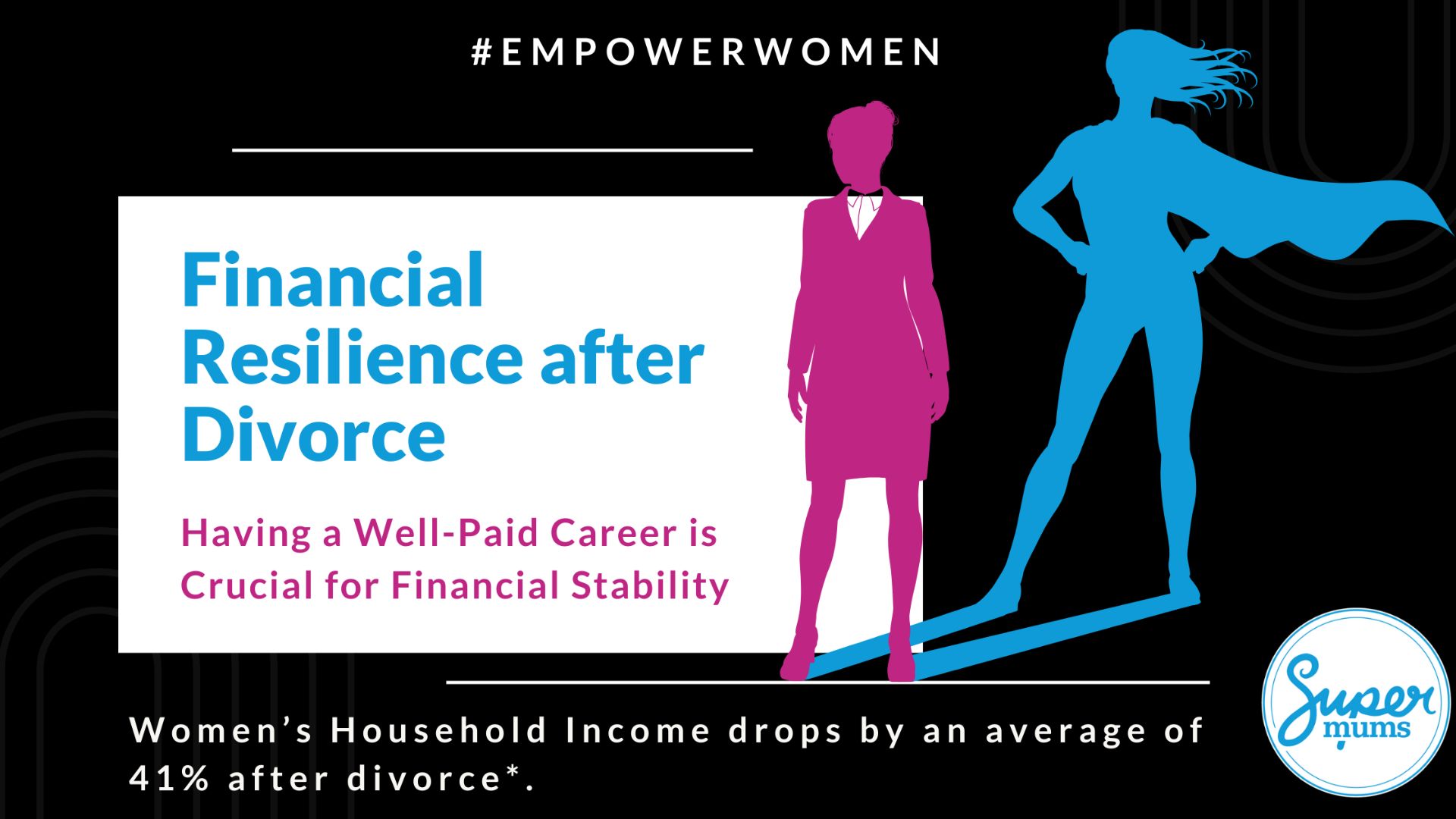
Divorce can create a particularly difficult cash-flow problem because one household budget may suddenly need to support two separate living arrangements.
Housing is an obvious example. Utilities, transportation, insurance, childcare, and other recurring expenses may also increase when a household separates.
The first financial priority is gaining a clear picture of each person's individual position. That can include reviewing credit reports, gathering copies of financial records, understanding which accounts are jointly held, and creating a realistic post-separation budget.
Major changes to jointly owned assets, accounts, or debts can have legal and financial consequences, so professional legal or financial advice may be appropriate depending on the circumstances.
The important distinction is between financial visibility and financial independence. Understanding what exists is necessary before making decisions about how assets and obligations will eventually be handled.
Rebuild Gradually After the Immediate Crisis
Once income stabilizes, it can be tempting to return immediately to the spending pattern that existed before the disruption.
That may be premature.
A household that has just recovered from a financial shock may still have depleted savings, accumulated debt, or higher fixed costs than before. A gradual rebuild provides more room to see whether the new income level is actually sustainable.
Rebuild the Cash Buffer
Start by rebuilding accessible savings for unexpected expenses. The appropriate amount depends on income stability, fixed costs, household size, and other resources, so there is no single reserve figure that applies to every family.
The key is to restore some breathing room before expanding discretionary spending.
Reconsider Fixed Expenses
A major disruption can reveal expenses that were difficult to notice when income was higher.
Housing, transportation, insurance, and recurring debt payments can consume a large portion of a household's baseline income. If those costs no longer fit the new financial reality, the recovery period may be a useful time to review them.
That does not automatically mean refinancing, moving, or taking on another loan. It means examining the available options carefully before committing to another long-term expense.
Bring Back Irregular-Expense Savings
Once the basic cash position has improved, resume saving for expenses that do not arrive every month.
Car maintenance, annual insurance costs, property-related expenses, school costs, and other irregular bills can create another financial shock when they are ignored. Setting aside money gradually can make those expenses easier to absorb.
This is where the household can begin moving from crisis management back toward ordinary financial planning.

Build the Next Budget Around the New Reality
A major financial disruption does not always mean the old financial system was poorly designed. Sometimes circumstances simply change faster than a household can adapt.
What matters is how the system is rebuilt afterward.
A household dealing with temporary income loss may need to focus on liquidity and flexible spending. A family facing a long-term reduction in earnings may need to reconsider fixed commitments. A separating couple may need to establish individual financial visibility while handling shared obligations carefully.
There is no universal recovery timetable, and there is no single expense hierarchy that fits every household.
What does help is breaking the process into manageable decisions: identify available cash, protect essential needs, review flexible expenses, communicate with creditors when necessary, understand available income and insurance options, and gradually rebuild savings as the situation improves.
Financial recovery is rarely one dramatic turnaround. More often, it is a series of small adjustments that make the household a little more stable each month. Once the budget reflects the household's current reality instead of its previous one, long-term planning becomes much easier to restart.
Filed under
More Stories