The Psychology of Budget Failure: Why Good Intentions Collide with Human Behavior
A household can build a perfectly sensible budget and still struggle to follow it. The spreadsheet adds up. The spending categories look reasonable. For a few weeks, everything seems under control. Then an unexpected repair appears, a few online purchases slip through, and the whole system starts to feel impossible to maintain.
The usual explanation is simple: poor discipline.
That explanation misses something important. People do not make financial decisions with spreadsheets alone. Convenience, emotion, habits, expectations, and the environment around us all influence what we spend and what we put off. A budget can fail even when the person using it genuinely wants to succeed.
That is why better budgeting is not always about trying harder. Sometimes the more useful approach is to build a system that accounts for predictable human behavior instead of assuming every financial decision will be perfectly rational.
When Spending Becomes Almost Invisible
One major change in everyday spending is that money has become much less tangible.
Paying with cash creates an obvious physical exchange. The money leaves the wallet, and what remains is visible. Digital payments work differently. A tap, swipe, or saved payment method can turn a purchase into a nearly frictionless action.
Research into payment behavior suggests that the way people pay can influence how strongly they experience the immediate cost of a purchase. Digital payments may make spending feel less tangible than handing over cash, particularly when the transaction itself takes only a second.
That can create two problems.
Individual Purchases Lose Context
A single restaurant delivery or online purchase may not look significant when it appears among dozens of transactions on a bank statement. The problem becomes clearer when several small purchases accumulate and quietly consume money that had been intended for groceries, transportation, or savings.
Digital Balances Do Not Always Create a Sense of Scarcity
Watching cash disappear from a wallet provides a simple visual reminder that resources are limited. A bank balance can feel more abstract, especially when spending happens through several apps, cards, and online accounts.
The answer is not to abandon digital payments. Instead, a household can add some structure around them. Separate accounts, spending limits, automatic transfers, and regular balance checks can create a visible boundary between money that is available and money that has already been committed.
Cognitive Biases That Can Derail a Good Budget
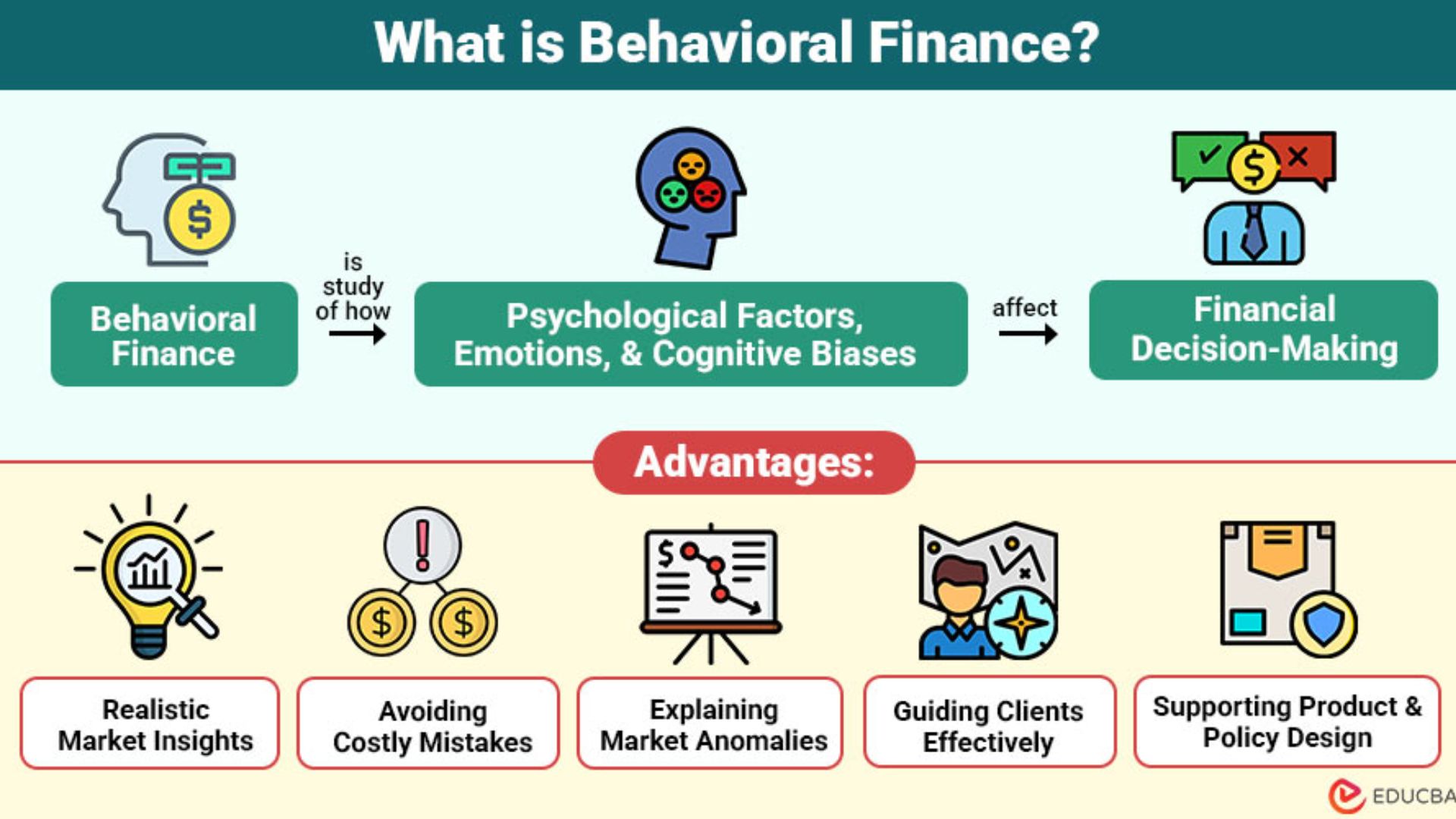
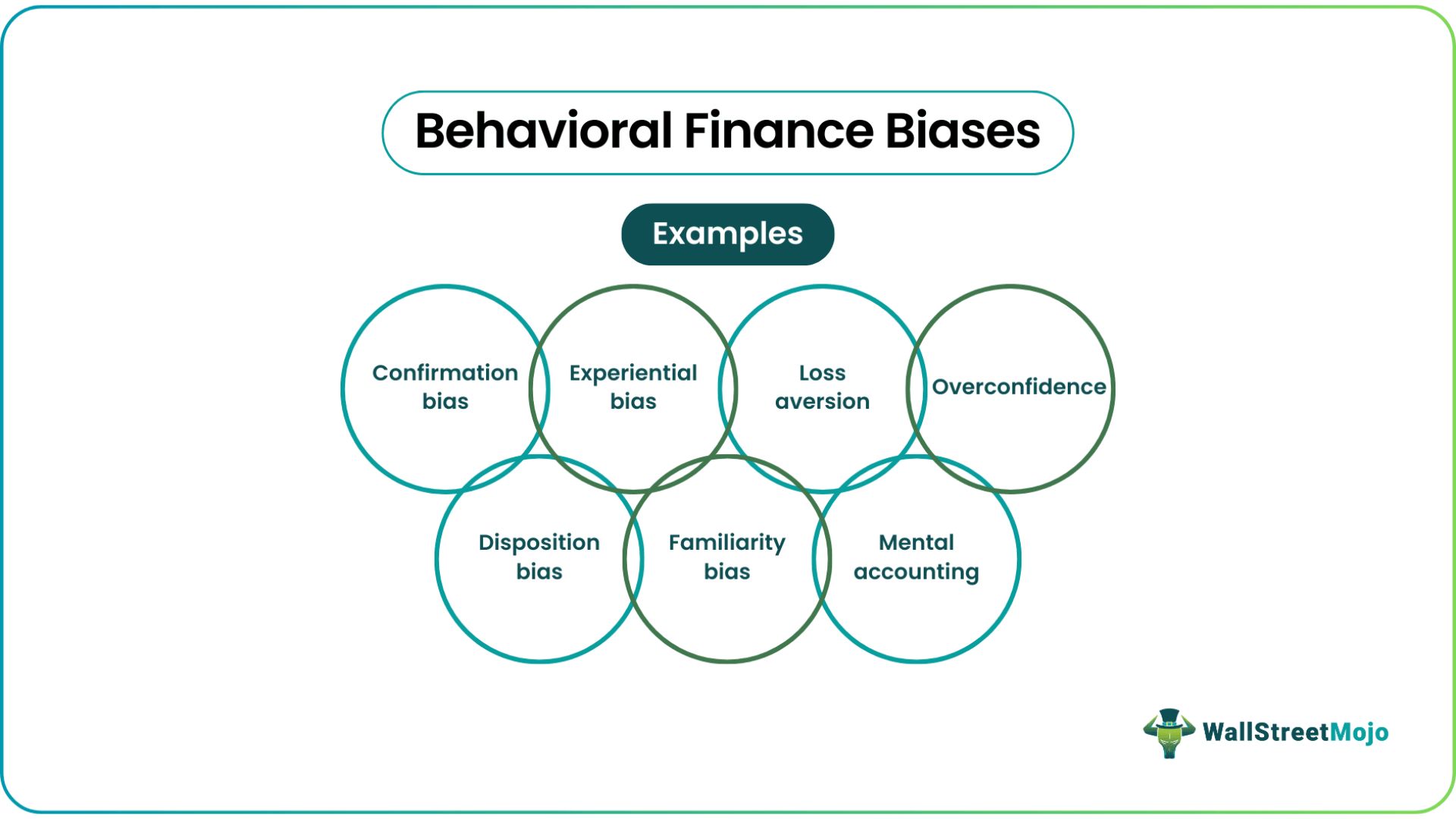
Behavioral economics has documented several patterns that can influence financial decisions. These patterns do not mean people are irrational all the time. They simply show that financial choices are affected by more than calculations.
Present Bias
Present bias describes the tendency to place greater weight on rewards that arrive now than on benefits that come later.
Consider the choice between saving money for a future goal and spending it on something enjoyable tonight. The immediate reward is concrete and easy to imagine. The benefit of saving may be months or years away, which makes it feel less emotionally compelling in the moment.
That creates a natural challenge for budgeting. Saving requires today's behavior to serve a future version of the household.
One practical response is to remove some of the decision-making from the moment itself. Automatic transfers can move money toward savings before it becomes part of the everyday spending balance. The idea is not to eliminate choice; it is to make the preferred choice easier to follow consistently.
Mental Accounting
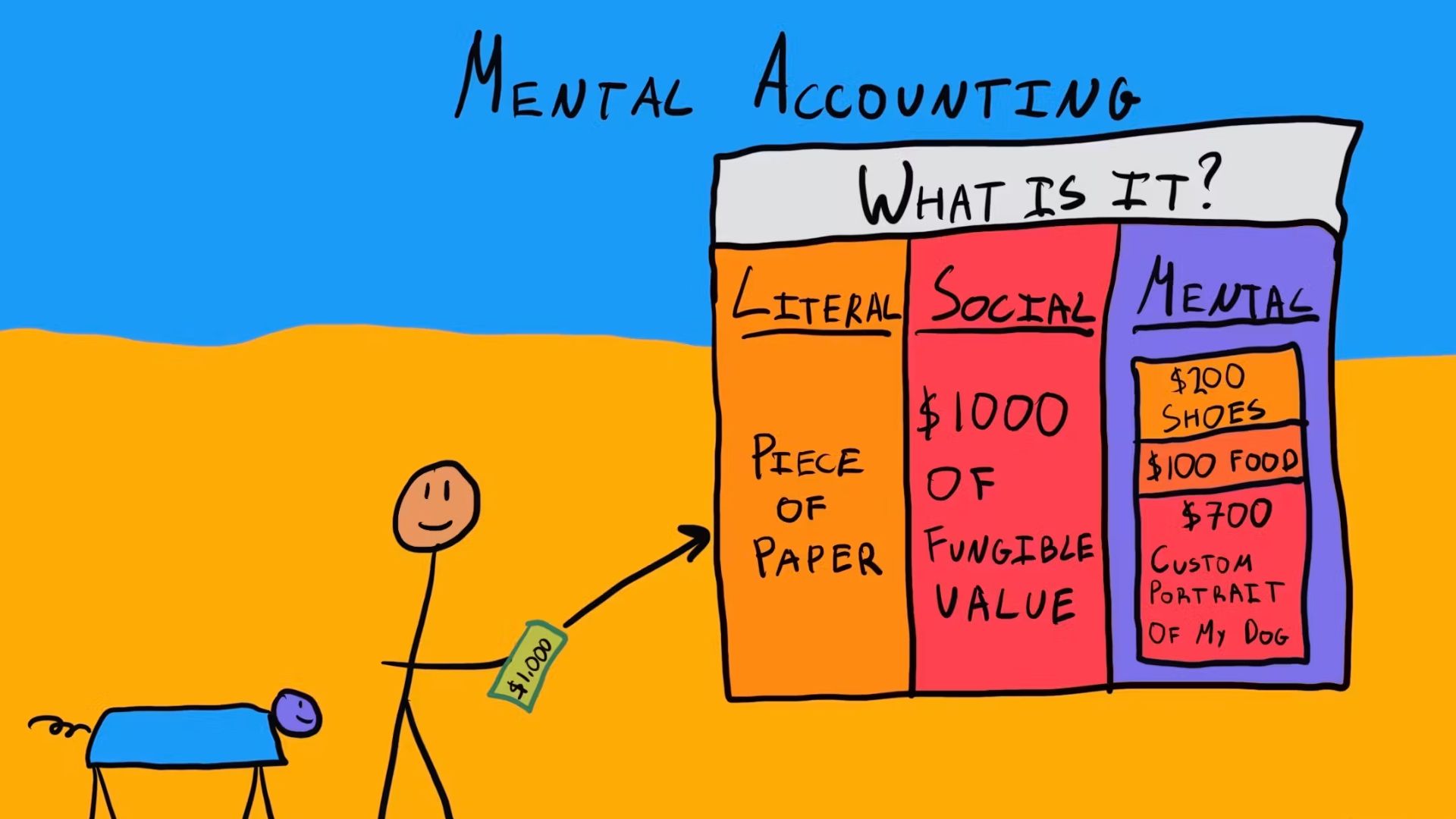
Mental accounting, a concept associated with economist Richard Thaler, describes the way people mentally divide money into different categories depending on where it came from or what they intend to use it for.
A household might treat a tax refund as “extra money” while treating regular income as untouchable, even though both can ultimately pay the same bills. Someone might also protect money labeled for a vacation while carrying expensive debt elsewhere.
The important point is that people often make different decisions with money simply because they have given that money a different mental label.
This can be useful when labels help a household save for specific goals. It becomes less useful when those labels hide the bigger financial picture. A good budget should allow room for goal-specific savings while still making it possible to see the household's overall cash position.
The Planning Fallacy
The planning fallacy is the tendency to underestimate how much time, money, or effort future activities will require.
It shows up easily in household budgets.
A person plans a month in which everything goes according to schedule: no car trouble, no unexpected medical copay, no broken appliance, no unusually expensive utility bill. The budget works beautifully—until real life produces something that was never included.
The problem is not necessarily that the unexpected expense was impossible to predict. Many irregular expenses are predictable in a broader sense even if their exact timing is unknown.
A more resilient budget makes room for that uncertainty through sinking funds, flexible spending categories, and a cash buffer. Instead of asking whether every month can fit a perfect plan, the budget assumes that some months will be more expensive than others.
Why a Pay Raise Can Still Leave a Household Feeling Tight
Higher income does not automatically create a stronger financial position.
A raise or promotion can initially bring a noticeable sense of relief. Over time, however, new spending can become normal. A larger apartment feels ordinary. A newer vehicle becomes the expected standard. Restaurant meals that once felt occasional start appearing in the weekly routine.
This pattern is often discussed through the idea of hedonic adaptation—the tendency for people to become accustomed to changes in their circumstances, including positive ones.
That adjustment can make lifestyle inflation surprisingly difficult to notice. Nothing may feel extravagant because each individual upgrade seems reasonable. The problem is the cumulative effect.
One way to counter it is to decide in advance what will happen when income increases. Part of a raise can be directed toward savings, debt reduction, or another financial goal before the additional money becomes part of the normal spending budget.
The household can still improve its lifestyle. The difference is that the entire increase does not automatically disappear into higher recurring expenses.
Design the Budget Around Real Behavior
If people are likely to encounter the same psychological pressures repeatedly, relying entirely on willpower is not a particularly strong financial strategy.
A better approach is to make the preferred behavior easier.
Automate the Important Payments
Savings, recurring bills, and other predictable obligations can often be automated. This reduces the number of decisions that have to be made throughout the month and lowers the chance that money intended for a specific purpose gets spent somewhere else.
Automation should still be reviewed regularly. A transfer that made sense a year ago may no longer fit the household's current income or expenses.
Plan for Imperfect Months
A budget that works only when nothing unexpected happens is fragile.
Sinking funds can help with expenses that arrive periodically rather than monthly. A separate cash buffer can provide additional room for genuinely unexpected costs. Together, these tools recognize something basic about household finances: some months will simply cost more than others.
Instead of treating those months as evidence that the budget failed, the system can be designed to absorb a reasonable amount of variation.
Give Discretionary Spending a Boundary
Trying to control every small purchase can become exhausting.
A defined personal spending allowance gives discretionary spending a clear boundary without requiring the household to monitor every coffee, hobby, meal, or small purchase. Once the allowance is used, additional discretionary spending can wait until the next budget period.
For couples, separate personal allowances can also reduce arguments over small purchases. Shared money remains focused on shared obligations while each person has some room for individual choices.
Make the Right Choice Easier to See
A useful financial system should make important information visible.
If spending money, bill money, and savings all sit in the same account, the available balance may not tell the whole story. Separating those purposes can make the household's financial position easier to understand at a glance.
The exact setup will differ from one household to another. Some people may prefer multiple accounts, while others may use one account with clear digital categories. The important feature is not the number of accounts. It is whether the system makes committed money distinguishable from genuinely available money.
A Better Way to Think About Budget Failure
A failed budget is not always evidence that someone lacks discipline.
Sometimes the budget assumed an unrealistic level of predictability. Sometimes digital spending made small purchases too easy to ignore. Sometimes the plan relied on constant self-control when automation could have handled the routine decisions. And sometimes the household simply changed while the budget stayed the same.
Those distinctions matter because each problem calls for a different solution.
If spending is difficult to see, create clearer boundaries. If unexpected expenses keep breaking the plan, build more variation into the budget. If saving repeatedly loses out to immediate spending, automate part of the process. If lifestyle inflation is absorbing every increase in income, decide where future raises should go before they arrive.
The most sustainable budget is not necessarily the strictest one. It is the one that still works when real life gets messy.
Good financial planning leaves room for imperfect decisions, unexpected expenses, changing priorities, and ordinary human behavior. When the system is designed with those realities in mind, managing household money becomes less about fighting against human nature and more about giving that nature a structure it can actually work with.
Filed under
More Stories